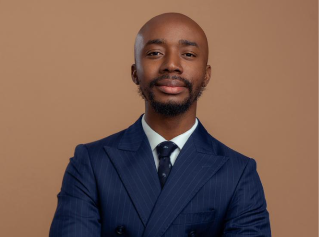
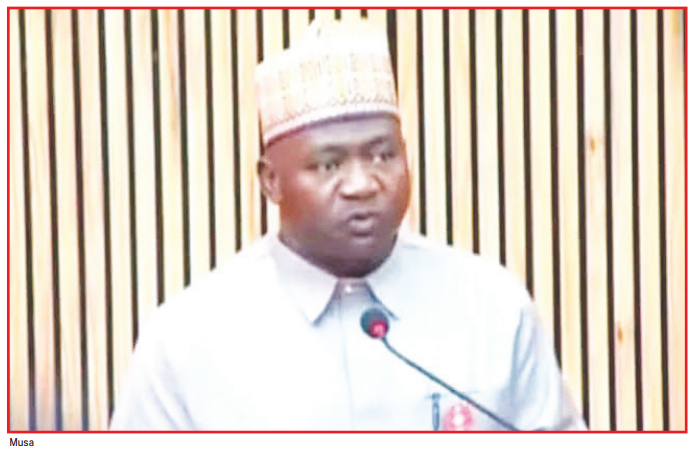
General Christopher Musa is the Minister of Defence. In this interview monitored on Arise Television, he speaks on the relevance of January 15 to the Armed Forces, his warning to those enabling terrorists, push back against dangerous international rhetoric and the sacrifices of military personnel, among other issues, ANAYO EZUGWU reports
You are a soldier and now the Minister of Defence; what does January 15 personally represent to you, a day of honour, a day of warning or both?
I think that events of January 15, 1966, were unfortunate but like we say, they are part of Nigeria’s history, so we can’t do away with it. But what is more important is what we do after that. How do we prevent repeating such mistakes in the future? I think steps have been taken.
Celebrating it, especially those that are still fighting trying to ensure peace in Nigeria and those who have passed on is very important. It’s relevant because it shows that Nigerians appreciate what the troops are doing, including those that have passed on.
And for those ones that are still fighting, it’s a morale booster to them that Nigerians are still with them, Nigerians are praying with them and everybody is praying for success in Nigeria. I think that’s very important and I can see that the awareness it is getting is better than what it used to be in the past.
How does the Nigerian military reconcile honouring its fallen heroes on the same date that marks the first military coup against civilians?
The military coup was supposed to be a disadvantage on what’s going on, but again, we have turned it like they say: When stones are thrown at you, you turn it to build a castle.
It was supposed to be a very sad event, which it is, but what we’ve done is instead of grieving over it, we have looked at the best way for the nation to appreciate that individuals are also dying daily, staying awake just to make sure that the country is peaceful. I think for us that’s very important.
After decades of coups and countercoups and an extended period of military rule, has Nigeria fully succeeded in placing the military firmly under democratic civilian control?
Correctly, I mean that’s one thing I’m very proud of. The Nigerian military has stood up to its responsibility, subjecting itself to military directives and you can see that the military actually tries better in a democracy. For us in Nigeria, it has always been better when we have a democratic government in place. So that’s what’s going on and I think that’s what we’ll continue to support.
Countries around us have gone the other way back into military misadventure but we’re also reaching out to them for them to understand that democratic governance is far better than the military rule.
What lessons should the armed forces draw from 1966, especially at a time of public frustration and great insecurity?
I think first and foremost we should know that coup is wrong. From now onward, nobody should ever think of carrying out a coup in Nigeria. We must all join hands together to support the democratic norm in place.
We must continue to work hard to make Nigeria peaceful and secure for all Nigerians. And I think that’s one aspect that we must all put our hands in there.
We want to call on Nigerians to understand that the armed forces cannot tackle the security challenges alone. We must as Nigerians take this as a Nigerian challenge and work towards ensuring peace.
We’ve heard claims of progress against terrorism and banditry yet many communities still feel unsafe and seem to be getting progressively less safe. How close or far are we from real lasting security?
I think we’re closer now than ever before. We keep on getting one story or the other of one attack or movement. What they normally do is wherever we have cleared and have moved forward, they come behind and want to attack. And the idea is to give that sense that there’s insecurity. But I can tell you that the atmosphere is getting a lot better than how it used to be but we need to do more.
Of recent, we’ve had a lot of direction from Mr. President to do more. We have also brought out what our challenges are and Mr. President is addressing those challenges. We’re getting additional platforms and additional support, and I can assure Nigerians that they should continue to be positive about it. Why these guys are thriving is because we have some certain individuals that still support them, trying to trade with them.
How do they get food in the bushes? There are people that take these things to them; people that give them information about troop movement, that provide logistics and information to them.
Communities that have decided not to support them are free. So, it’s important for Nigerians to understand that security men cannot be everywhere. Everybody has a responsibility to offer support to the enforcer. Once you see something going wrong, report as quickly as possible.
That sounds like there is a gap somewhere that intelligence isn’t working…
Like I said, we cannot be everywhere. And then, sometimes, once this information comes, because of the nature of the terrain, and like I told you the other time, because of IEDs, if you have information, for you to move 10 kilometres will take you more than five hours because if you make a mistake and you step on an IED, everybody is dead. So, these are the challenges we have.
And that’s why we say we should look at what are these things that got us to where we are today, things about justice, fairness, equity, infrastructure development, which is being done now. I think we need to do more. When we have that, it will also assist. We should also look at how they do their recruitment. We need Nigerians to come together to say no to what’s going on.
I remember you’ve made this point before, but it sounds like your as sessment is that Nigeria’s security challenge is not so much primarily a military problem. It has also become governance, intelligence and social crisis that guns alone cannot solve… That’s what I’m saying because of the isolation of the kinetic and the non-kinetic.
The kinetic aspect cannot solve all the problems. It will only provide an enabling environment for all other aspects to take place. And I think that’s very critical. We mentioned the issue of our borders. Efforts are being made and that’s why we are going to do more with our relationship with Niger, Chad, Cameroon and Benin Republic because they have equally begin to face a similar issue.
I think on a general term, it’s for us to understand that what’s going on now is a world challenge. It’s an issue that’s challenging the entire world. Look at what’s happening in Mozambique. Look at Burkina Faso. Look at Mali. Look at Nigeria and other countries. So, it’s something that we all must come together to fight.
US President Donald Trump threatened to come into Nigeria guns ablazing. How seriously does Nigeria’s defence establishment take such statements?
I think the rhetoric was overblown. There’s nothing happening like guns ablazing. Nigeria is a sovereign country. Whatever we did, whatever happened or whatever is going to happen, we have that collaboration, working together jointly.
I can tell Nigerians clearly that whatever it is that America is doing in Nigeria or is going to do in Nigeria, will have to be discussed, planned and executed together. No country will just fly into Nigeria and do whatever it feels like doing. No, it won’t happen that way
Does that kind of rhetoric risk undermining Nigeria’s sovereignty or does it reflect a failure of Nigeria to control the narrative around its security crisis?
What I need to say is that Nigerians are being killed. Christians, Muslims, non-Christians, non-Muslims have been killed. The truth about it is that we have certain individuals that target certain individuals.
We have the ISWAP, the Boko Haram. It’s not a Federal Government policy to go after Christians. That’s one thing that we want to make very clear because most times the international community has this intention to feel as if the Nigerian government is planning to eliminate Christians. No, it’s not the government. But we have certain criminal elements that want to take advantage and they have their other priority.
If a Christian minority community is living in a place where they’re entirely surrounded by a Muslim majority, the state in which they live is a Sharia state. Don’t you feel that those people might feel a tremendous sense of oppression in that place?
Fear is natural. Fear is human nature and there could be perception. I was born and raised in Sokoto. I spent my entire formative years in Sokoto. It was going to the Nigerian Defence Academy that me to leave Sokoto. I had one of the best upbringings because Sokoto was wonderful.
I’m still very proud of growing up in Sokoto. It’s not only for Christians; it is the same thing with Muslims wherever they are and there’s probably a large population of Christians. They probably might also feel that sense of fear. If you give birth to a kid today and you put him in the dark, he gets scared. Fear is natural and perceptions are there.
If you say things that encourage others to take up arms, go into kidnapping and into killing, you are encouraging them one way or the other and I think you’ve crossed the line
We know that there are issues in Nigeria about how we view religion. And I really don’t understand why we take it so much. Sometimes I think we’re taking it to the extreme – both religions. But I think we’re getting to understand each other. And we need to also make the international community understand that Nigerians are being killed and it is important for the killings to be stopped.
That’s what the effort of the Federal Government is geared to. And for anybody coming to support us, what we tell them is that Nigerians are being killed and we want the killing of Nigerians to be stopped.
I’m sure you know that Nigeria is now lobbying aggressively in Washington over security and these religious violence narratives. From a defence standpoint, is this about protecting the country’s national image or preventing foreign intervention?
I think it’s to protect, you know, now everything is about the media. I mean, the media is very powerful and perception, like I said, is always very dangerous.
Internationally, there’s this growing belief because we have certain individuals that have consistently gone to Congress to say that ‘Nigeria is a failed state; we need help from outside’ not knowing that the more they do that, the more they put the country in bad light. I have a friend who just came in from Brazil.
Before coming, the impression they gave him was, if he comes to Nigeria, they are shooting everywhere, you can’t move. And he came in and he couldn’t believe what he saw. Remember last year, we also hosted the African Military Games. We had about 22 African countries that participated.
Again, late last year, we had the Chief of Defence Staff Summit. Over 25 Chiefs of Defence Staff from African countries came. And all of them, when they came, they said, look, in the press, what they saw is that Nigeria is dangerous and is not a place to go. But they came here and they move freely.
So, that is the perception. I think that’s what the Federal Government is trying to work on, for people to understand that Nigeria is not bad. Nigeria is a very peaceful place.
Yes, we have our issues and everybody does the same thing. There is no country in the world that is peaceful. You heard about the attack in Australia. Australia is presumed to be very peaceful. But some individuals took up arms and killed a number of people.
You recently warned individuals who support or sympathize with terrorists, referring to figures like Sheikh Gumi. What exactly constitutes support in your view?
Support means if you encourage them one way or the other. I mean, by support, telling them that what they are doing is right and that the government is wrong and that they are victims.
A criminal is a criminal. Anybody who supports a criminal, to us, is a criminal. We must all come together to understand that criminality must be addressed.
So, in one way or the other, it’s either you are giving them funds or you are providing logistics to them or you are giving them information. If through media, you are trying to encourage them, it means you are also part of them. And I think that’s very critical.
That’s why I want to appeal to our leaders, especially opinion leaders, religious leaders, traditional rulers and politicians in leadership; we should be careful what we say. It’s important.
Yes, there’s freedom, but your freedom shouldn’t be an infringement on others because the comments you make, whether rightly or wrongly, could have effects on some communities.
Do you think Nigerians, such as Sheikh Gumi, who negotiate with or publicly rationalise bandits and terrorists should face legal consequences?
I think I’ll leave that to the legal people, but all we’re saying is that to advise such individuals to know the status they hold in the country, and that there are people that listen to them hook, line and sinker.
So, whatever it is they say has effect on others. I’m sure actions will be taken once they cross the red line. Remember Simon Ekpa, it was here we spoke about the need to get him.
Immediately he was gotten, what happened? The Christmas in the South East was a lot better than ever before. So, individuals must be careful. Nobody is above the government, and nobody is above the law.
Talking about the red line, where should Nigeria draw the line between freedom of speech, mediation efforts and actions that embolden violent groups?
You can easily decipher those things quite easily. If you say things that encourage others to take up arms, into kidnapping and into killing, you are encouraging them one way or the other and I think you’ve crossed the line.
I’m sure that the Department of State Services (DSS) and the police are taking necessary action. They are watching, and I’m sure once that red line is crossed, necessary action will be taken.
You’ve been Minister of Defence for just a few months now. Prior to that, you were Chief of Defence Staff. What’s the difference between the two?
Like you said, I’m in mufti and I’m appearing in mufti, which is a new challenge to me. I’ve been in the last 35 years wearing uniform; now every morning, I have to think, what dress am I going to wear. Before it wasn’t like that but I think it’s a higher calling, it’s a higher responsibility.
Now, we have to deal a lot with politics, which is very critical in what we’re doing. For the armed forces, we already know what the challenge is, and we know what to do, and I’m happy with the Chief of Defence Staff and the service chiefs.
We are working hand-inhand, including all the security agencies. We’re going to reach out to everyone that is a stakeholder in Nigeria and make them know that they have a role to play and that we need them to be on the table, so that we can have peace.
Without putting you on the spot, which of the two do you prefer?
Which of the two do I prefer? I think both are okay. Before being a military man, I was a civilian. I’ll serve my time and I will still go back to civil life. So, you can’t separate the two.