



...Finds Improvements In Data Systems
The Sokoto State Commissioner for Health, Dr Faruk Umar Abubakar, has revealed that the state government has stepped up reforms in its health data, regulatory, and infrastructure systems ahead of its 2026 sector rollout.
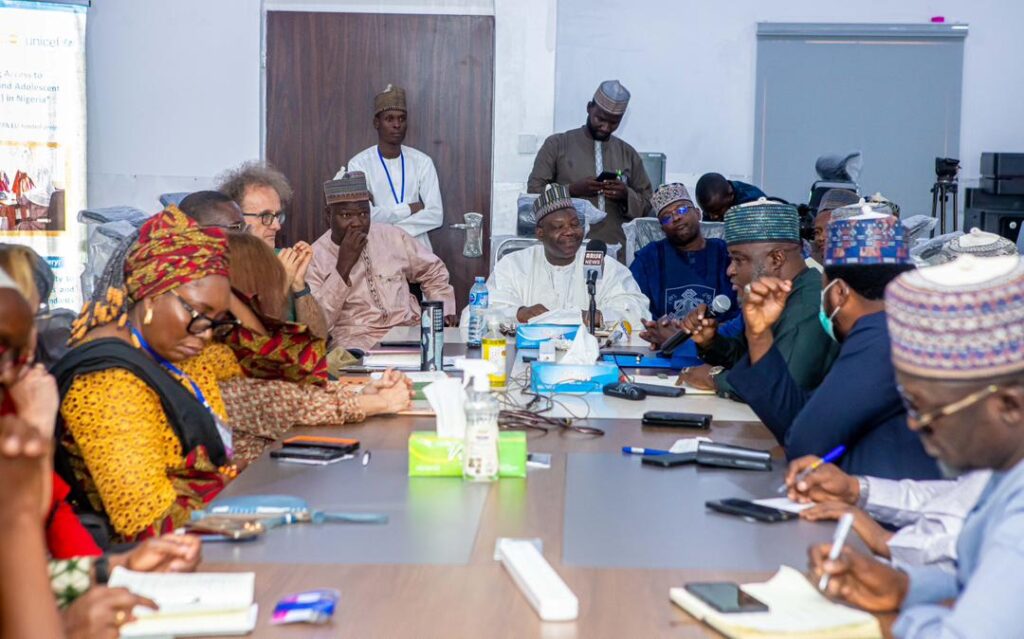
Dr Abubakar made this disclosure while briefing a European Union delegation at the state’s Emergency Operations Centre (EOC).
The EU delegation, led by Massimo de Luca, Head of EU Cooperation, is in Sokoto ahead of a planned multi-agency health initiative expected to be launched in the state.
He stated that the administration has prioritised data reliability and accountability to enhance planning, monitoring, and service delivery.
To achieve this, the Ministry has strengthened its Monitoring, Research, and Evaluation (MRE) department and upgraded the State Information Management System.
Additionally, the government has produced new data collection tools and initiated an e-Health system expected to be expanded in 2026.
“These efforts are aimed at providing excellent data collection and ensuring better decision-making across our health services,” Dr Abubakar said.
On regulatory reforms, he noted that provisions have been made across primary, secondary, and tertiary levels, including infrastructure upgrades, procurement of medical equipment, and improved staff training.
The Commissioner highlighted that the 2026 budget proposal prioritises health, accounting for roughly 60% of government spending.
The proposal is currently before the State House of Assembly, and Dr Abubakar expressed confidence that it will be approved.
In terms of facilities, the state has renovated about 116 health centres under the income support program and refurbished 61 primary centres in 2025.
Out of 242 primary health care centres (PHCs) in the state, 216 have been renovated, with more upgrades expected in 2026 based on priority needs.
Dr. Abubakar also disclosed that the state has instituted an accountability framework to manage basic health provision funds, ensuring facilities receive direct financing through independent accounts and develop business plans to operate sustainably.
Furthermore, 132 PHCs are receiving additional support through the State Contributory Health Agency under the National Health Insurance Gateway.
The delegation also includes representatives from UNICEF, Plan International, Action Against Hunger, International Alert, and others.









