The Defence Headquarters (DHQ) on Tuesday described the media as strategic partners whose role in national affairs cannot be over-emphasised.
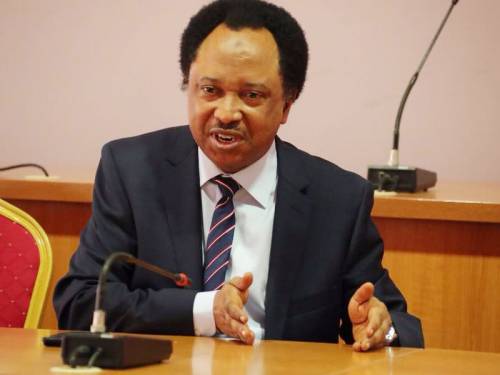
The Director of Defence Media Operations, Major General Michael Onoja, stated this in Yenagoa, the Bayelsa State capital, during a media tour of the Joint Task Force, South-South, Operation Delta Safe.
Major General Onoja noted that the Armed Forces of Nigeria (AFN) would continue to emphasise the critical role of the media in the national security architecture.
According to him, information operations have become a vital component of modern warfare, but are often underestimated.
“One of the key issues we continue to emphasise is the significance of the media in national affairs. In modern warfare, information operations are a critical component of military operations. Unfortunately, this aspect is often downplayed,” he said.
“Yet, the narratives pushed by adversaries — whether psychological or physical — can be as damaging as kinetic actions.
“At the Directorate of Defence Media Operations, we see it as our mandate to deliberately shape and correct narratives in support of national security objectives. This is why we consider the media not as adversaries, but as partners in progress.”
Onoja further explained that in many democracies, especially within the British Commonwealth, the media is recognised as the fourth estate of the realm, while Nigeria’s 1999 Constitution clearly outlines the media’s responsibilities.
“In Nigeria, Section 22 of the 1999 Constitution assigns the media the responsibility of upholding the fundamental objectives of the state and holding government accountable to the people,” he noted.
He added that the Armed Forces of Nigeria, under the leadership of the Chief of Defence Staff, remains committed to transparency and accountability in line with constitutional provisions.
“All military operations are conducted with due regard for the civilian populace, whose confidence and trust remain critical to operational success,” he said.
The defence spokesperson also highlighted that actions taken at the tactical level often have wider implications.
“It is important to emphasise that actions at the tactical level often have operational and strategic implications. The conduct of individual soldiers, including at checkpoints, can influence decisions taken at the highest levels.
“Therefore, professionalism, discipline and restraint must guide our actions at all times,” he stressed.