…as Cross River Governor Chairs Bi-Partisan Committee On Legacy Projects
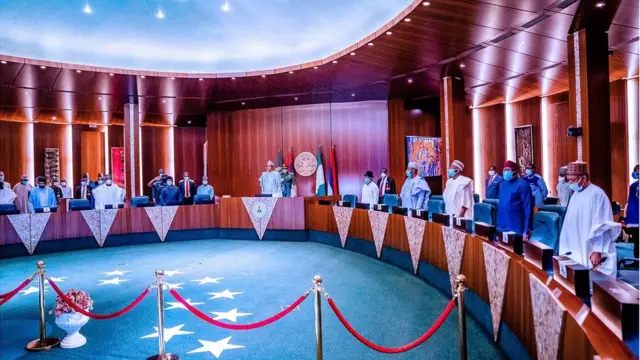
The National Economic Council (NEC) has resolved to deepen engagement with stakeholders to boost non-oil revenues in line with the economic blueprint of the administration of President Bola Tinubu.
This came just as Chairman of the Council, Vice President Kashim Shettima, called for an accelerated transition from oil to a non-oil economy through competitive manufacturing, export diversification, and private sector investment.
According to a release by his spokesman, Stanley Nkwoccha, the Council has also approved the constitution of a Committee on the implementation of the President’s directive on the actualisation of the legacy projects.
The committee is to be chaired by the Governor of Cross River State, while one governor from each sub-region will serve as a member of the committee as follows: North West (Sokoto), North East (Gombe), North Central (Niger), South East (Abia), and South West (Lagos).
The Permanent Secretary of the Ministry of Budget and Economic Planning, Deborah Odoh, shall serve as Secretary, while the Ministers of Works and Transportation will also serve on the committee.
NEC’s decision, taken on Thursday during its 156th meeting and first of the year, which was held virtually, followed a presentation on the economic priorities for 2026 by the Minister of Finance and Coordinating Minister of the Economy, Mr Wale Edun.
The presentation highlighted key reforms implemented by the Tinubu administration, including targeted programmes that have removed distortions in the system, stabilised the economy and put Nigeria on the path of sustained recovery and prosperity.
The presentation also reflected the country’s current global recognition, which is reinforcing investor confidence in the economy projected to grow at 4.68% in 2026.
The key priorities, according to the Minister, included maintaining Nigeria’s economic competitiveness through sound governance, improved availability and affordability of food, ensuring human capital development with improved social protection and timely payment of debt service, salaries and pensions.
In its resolution, NEC noted and commended the Federal Government’s plans to unlock rapid and sustained job-rich growth, high-quality jobs, and entrepreneurship opportunities.
The Council also resolved to dedicate a special session to address salient issues raised in the country’s food security efforts, particularly issues bothering on agricultural productivity.
In his opening remarks, Vice President Shettima observed that while “global powers assert their interests with renewed confidence, commodity markets will remain volatile,” with oil prices, exchange rates, and capital flows frustrating the nation’s policies.
He noted that the current economic reality has reinforced the urgency of fiscal risk management and the need to reduce the nation’s economic and revenue exposure to oil.
According to him, the non-oil economy has emerged as the backbone of Nigeria’s growth story, accounting for about 96 per cent of the country’s GDP and is expanding at about 4 per cent.
“Services, agriculture, and other non-oil sectors are increasingly carrying the weight of the economy. More importantly, non-oil revenues now contribute nearly three-quarters of total government collections.
“This marks a significant, if gradual, departure from our historic dependence on volatile oil receipts. The task before us is to deepen this transition through competitive manufacturing, export diversification, and private sector investment,” he said.
Shettima, Chairman of NEC, acknowledged that while it was the first meeting of the Council for the year 2026, the consequences of the choices made last year demand coherence, courage, and consistency in the new year.
“This moment in our journey calls for neither triumphalism nor despair. What it calls for is perspective.