

…says without true federalism, Nigeria’ll not make progress
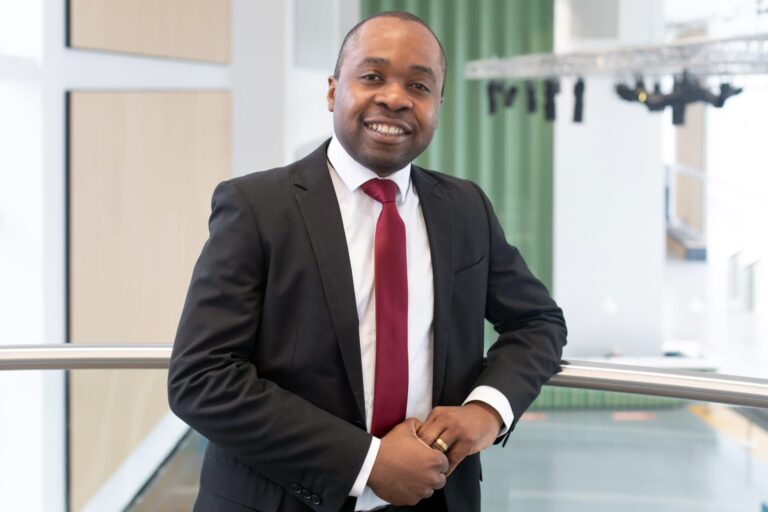
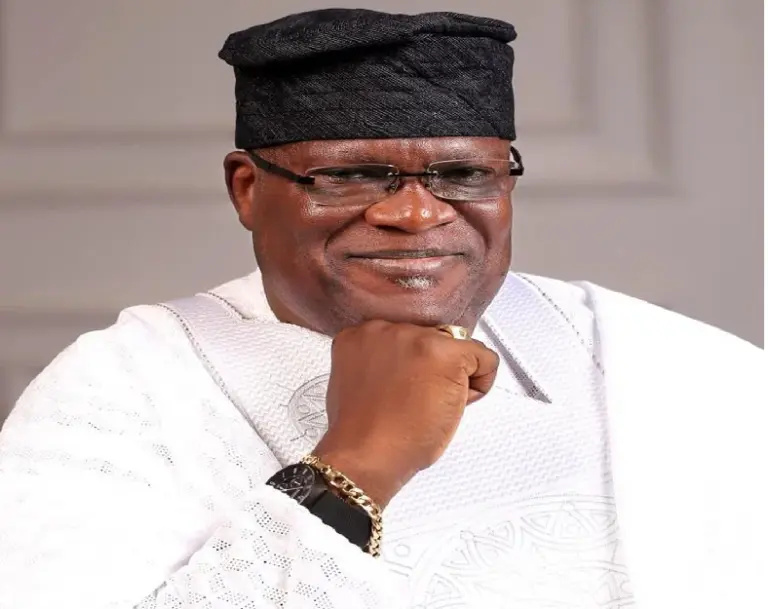
General Idada Ikponmwen (rtd) has held several positions in the Nigerian Army and is a well known lawyer based in Benin City. In this interview, with, OJIEVA EHIOSUN, he spoke on national issues. Excerpts:
Can Nigeria come out of the numerous issues currently bedeviling the nation particularly insecurity?
President Bola Tinubu has now come out to show that he’s ready to address the insecurity in Nigeria, the corruption in Nigeria, the bastardisation of democracy in Nigeria.
Now he has declared war on terrorism. He has declared emergency on insecurity. It’s the failure of government in Nigeria that made American President Donald Trump, American legislators to first declare Nigeria a Country of Particular Concern.
Nigerians have different views or were apprehensive over U.S. interest in helping Nigeria to combat the issue of insecurity; as an expert what is your take on this?
Actually a lot of people were apprehensive saying America wants to come and rubbish our sovereignty. Some of us asked: what do you understand by sovereignty? The concept of sovereignty has changed over the years. We’re no more talking about sovereignty.
We’re now talking about unity, cooperation among nations for common good. The United Nations Charter which forbids intervention of one nation in the affair of another nation has also changed. What is now forbidden is forceful intervention, in other words when you want to impose your will on another country for no justifiable reason.
Is Nigeria really practicing true federalism, (democracy) the way it ought to be practised?
The collapse of the Berlin Wall which is the collapse of communism has reduced the world into a unipolar world rather than a bi- polar world – Russia and America. We now have a unipolar world. What used to be international law that cannot be enforced has now become enforceable.
For example, genocide, the issue of piracy, the issue of ethnic cleansing, the issue of illicit drug business and the issue of democracy.
The world has not found a better option than democracy so there are democratic concepts rule of law, free and fair election, fundamental human rights. These are all parts of democracy, the wellbeing of the citizenry.
These have all become global norms whose breaches are forbidden, prohibited globally and they have become actionable. Anybody in breach of any of these concepts should be brought to book by any nation that has the capability. So, the question now is that there’s a big change in the international forum and therefore in the international politics.
Not many people, not even all lawyers are aware of these changes unless those who are particularly interested in international law. If it’s now true that certain behaviours and practices that could not be redressed before can now be redressed by international community, by International Criminal Court (ICC) then the world has changed.
This is what some of us have been talking about. If government cannot protect people, their lives, their properties, their values, their fundamental human rights, cannot observe the rule of law then we expect those who can do it to do so. And the global environment now permits them to do it.
President Bola Ahmed Tinubu, seems to be getting more proactive in solving some of these national issues. Do you think he has the capacity to fix Nigeria?
There was much talk about al- lowing the Americans come to Nigeria to solve the insecurity issue. It was after these talks that I now noticed a major shift in the attitude of Tinubu’s government. He declared emergency on security, he announced that some powers that were being exercised by the federal government should be transferred to the states.
He gave the impression that Nigeria was now going to work with America to track down those people who are financing terrorism. One of the things that impressed me most was that it was recognised that true federalism was not being practised in Nigeria.
That everything is going to be done to make sure that we dump this unitary system that was imposed by the military so that we can be among the nations that practice true federalism. This is what some of us have been fighting for, talking about in the past three decades. So, if President Tinubu is saying that he is going to do all these things I am sure that many Nigerians will start thinking again whether this is the Messiah that Nigeria has been looking for.
Of course, whatever action he’s taking some will like it, some will hate it. The way the country is composed now politically there can be no change by voting on the floor of the house (National Assembly) that will change some of these concepts that we’re talking about now. It has to be a change championed by the government itself.
Would Tinubu get supports from Nigerians when the majority have lost confidence in his administration?
We say government is the people. Yes, government is the people because sovereignty resides in the people. Will Nigerian people support President Tinubu to embark upon and pull through the changes that he has announced he was going to bring about now? Is it time now to say we must think Tinubuism? Like people say if you know what becomes honey, what and what transforms into honey you will not lick honey.
Are we getting there? Can Tinubu get some of these changes? I am talking of true federalism. A renowned constitutional lawyer wrote in his book that if the federal government begins to handle things like motor park, like refuse disposal etc and all those things that are supposed to be localised then the federal government ceases to be federal, it becomes a state or local government.
All he was trying to say is that there are things for the federal government to handle and they’re supposed to be very few so that it can handle them well, so that the contribution from the state government will enable it to have the economic power to do those things. But when it is the federal government that’s doling out money to states, then we are far from federalism.
Are you saying that federalism is the best form of government?
If we cannot practice true federalism we are deceiving ourselves hoping that Nigeria will change and government at all levels would be effective. Federal Government must divest itself from the power that belongs to other levels of government. In the federal system, the real governments are the federating states.
The federal government leaves the other governments to take care of a few important issues like defence, customs and aviation. If we don’t ensure that there’s devolution of power this security we are talking about can never be.
This also reminds me about government now saying that the states should have their own police as against what is in the Constitution that there can be no other police force except the federal police which is completely unacceptable in the federal system. In Vision 20 20 20 we discussed this at length and a majority of the voices from the Northern part of the country said no to police been decentralised.
In CONFAB 2014, the matter was also seriously discussed. Most well meaning voices said ‘yes, police at the state level was necessary.’ But until now there has been no clear signal. The things that Tinubu govern- ment is trying to put on course now are laudable things and whatever has prompted him to assume this posture we shouldn’t worry ourselves about it.
What we should all be doing is to appeal to those who for no just reason want to sustain the old order to start reasoning better, for them to realise that with true federalism Nigeria would be a better place for everybody. Of course, in federalism like I said earlier the power of the federating states must be such that they must have clout. If they don’t have clout how can they face the federal government in any quest for change?
Are you saying that many of the states cannot sustain themselves? Now we have 36 states and Abuja many of which cannot sustain themselves.
The governors spend more time in Abuja lobbying for reimbursement than they spend in their own states. How is that going to help us? We need states that will be able to have the resources. They have enough land mass that they will generate enough revenue from.
From the revenue they generate they’re able to support the federal government. It’s the states in a federal system that support the central government to function. In international politics, it gets to a point where you stop talking about whether the man was prop- erly elected or improperly elected. It gets to a point you say is this man a ruler or is not. A usurper if you call him so who gets acceptance is no more a usurper. He becomes legitimate.
That’s why when countries are granting recognition that’s what they look at. Is this man in effective control? If he is, it’s not the business of the foreign power to say ‘no he didn’t win election.’ He is there he is there. If we don’t recognise our assets, our people in that country will suffer. Therefore, in protecting own interest they grant recognition.