


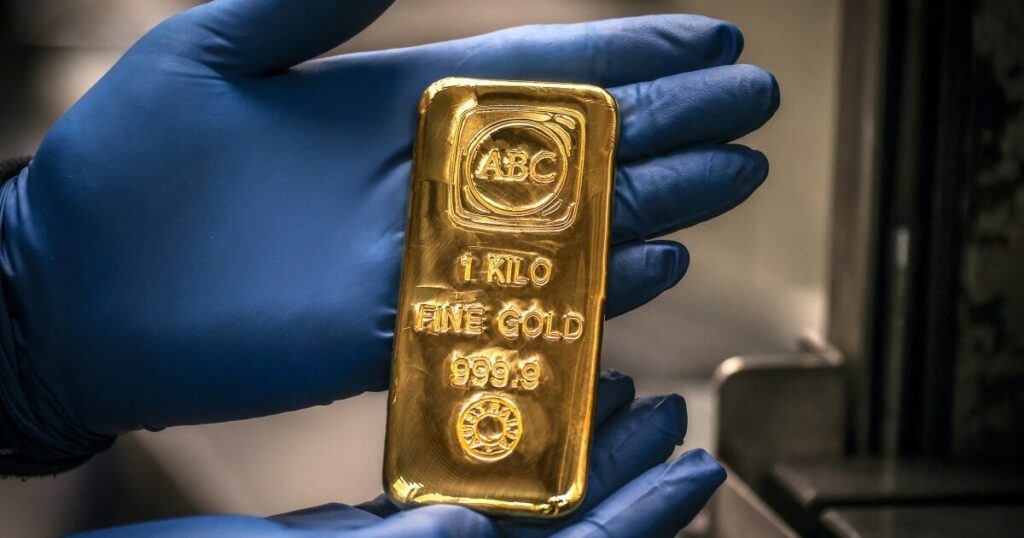
The historic gains of gold in 2025 have resulted in record gains for the Ghanaian and Zimbabwean currencies.
According to Bloomberg, Ghana’s cedi posted a 41 per cent gain against the American dollar, the first annual gain since at least 1994, when Bloomberg began compiling the data. That made it the best performer among 144 currencies tracked by Bloomberg after the Russian rouble.
This gain was driven by the rising prices of the precious metal, often seen as a safe store of value in turbulent times.
The PUNCH reports that gold prices hit a series of record highs this year as investors turned to precious metals as stores of value amid uncertainties caused by economic and geopolitical tensions.
The report indicated that Ghana’s central bank has been increasing purchases of bullion, which saw gross international reserves go up by 24 per cent to $11.4bn as of October from the start of the year.
In May, the government established an institution known as GoldBod to buy the metal from small-scale mines, a move that has helped direct their output into the formal economy and curb smuggling. The institution has exported 25,780.6 kilograms (909,384 ounces) of the metal in the third quarter, which marginally surpassed shipments by large-scale mines.
In Zimbabwe, gold’s rally and the buildup in foreign-exchange reserves have provided a lifeline to the country’s bullion-backed currency. The Zimbabwe Gold (ZiG) traded at 25.98 per dollar on Tuesday, marking its strongest level since 8 January, according to Bloomberg.
ZiG, which is the country’s attempt to get a stable currency, was introduced in April 2024 and has depreciated only 0.7 per cent against the dollar in 2025, a departure from the volatility that had historically defined Zimbabwe’s currency market. The unit is backed by 2.5 tonnes of gold and $100m in foreign currency reserves held by the central bank, providing tangible support for its value.
The PUNCH reported that the African Export–Import Bank and the Central Bank of Egypt have signed a Memorandum of Understanding for the African Gold Bank in Egypt to formalise the gold value chains, strengthen central bank reserves and reduce Africa’s reliance on foreign refining and trading hubs.