

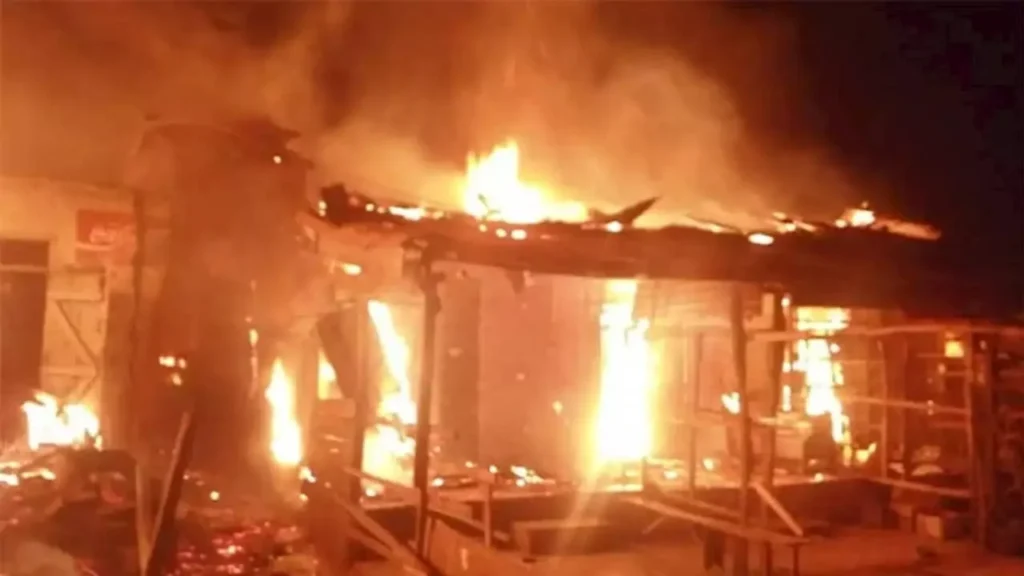
In a sad start to the new year, a fast-moving fire consumed four electronics shops in the Ikotun area of Lagos in the early hours of Thursday, marking at least the third major inferno to hit the city’s business districts in just over a week.
The blaze, which erupted in a building adjacent to the GUO Transport Company, completely destroyed shops dealing in appliances such as washing machines, television sets, and power generators.
While no lives were lost, the economic damage was total, with every item inside the shops reduced to ashes.
“We used so much water trying to fight it before the fire service came,” recounted a resident who lives near the building.
“He praised the collective effort of neighbours who battled to contain the flames, preventing them from spreading to other sections of the building and potentially to adjacent homes.
His account highlighted the critical, though delayed, role of emergency services.
“If not for their timely intervention, the whole building would have burnt and the fire would have affected our own,” he said.
Though the official cause remains under investigation, preliminary suspicion points to a faulty electrical circuit as the likely trigger. The area has since been cordoned off by authorities.
This incident casts a worrying spotlight on Lagos’s recurring fire crises.
According to reports, this is not an isolated tragedy. Within the past eight days, flames have gutted the Great Nigeria Insurance building on Lagos Island and ravaged sections of the Army Arena Market in Oshodi.
The frequency of these disasters is raising urgent questions about fire safety compliance, the state of electrical infrastructure in bustling commercial areas, and the capacity of response systems.
As smoke cleared over Ikotun on New Year’s Day, the charred remains of businesses served as a stark reminder of the fragile line between livelihood and loss in Africa’s largest megacity.