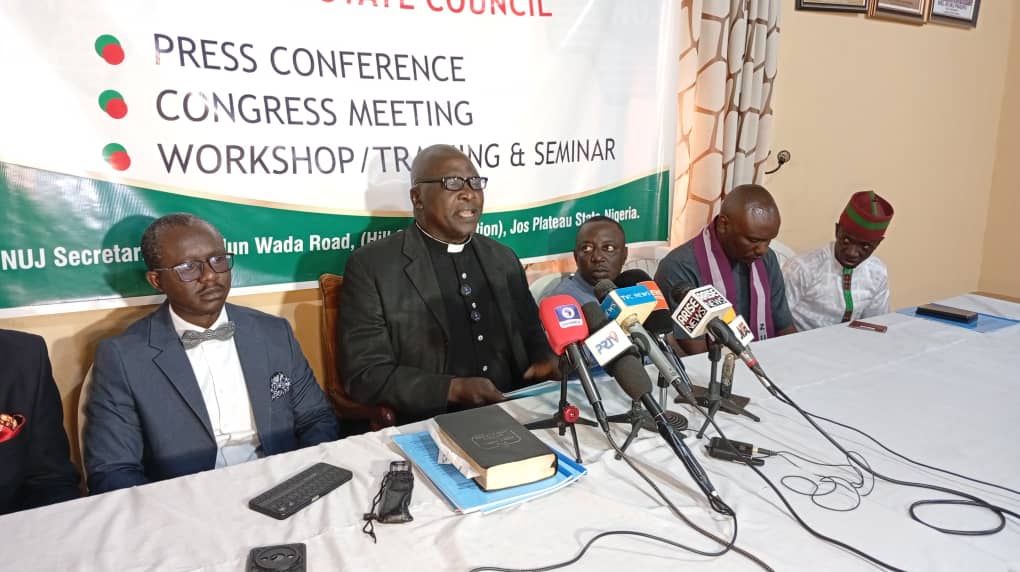
The Christian Association of Nigeria (CAN), Plateau State chapter, in conjunction with a coalition of indigenous youth organisations, has raised the alarm over what it described as a “systematic genocide” against Christian communities in Nigeria’s North and Middle Belt, calling for urgent international intervention.
The groups made the allegation on Wednesday at a joint press conference in Jos, where the position was presented by the Chairman of the Ropp Regional Church Council of the Church of Christ in Nations (COCIN), Rev. Ezekiel Dachomo.
Addressing journalists, Rev. Dachomo said the briefing became necessary in view of what he termed overwhelming evidence of coordinated attacks, mass killings and the forced displacement of Christian populations across several states over the years.
According to him, documents submitted to the media included community records, lists of victims, district and church reports, as well as photographic evidence spanning more than two decades.
“I stand before you today not only as a pastor, but as a witness,” he said. “I have buried the murdered. I have lost my brethren, my blood relatives, and even my best friend. I have walked through burned villages and held services in destroyed churches.”
Rev. Dachomo faulted the frequent portrayal of the violence as farmer-herder clashes, insisting that the attacks amount to a deliberate campaign of extermination and land occupation.
He alleged that several communities in Plateau, Kaduna and Benue states, once attacked, have been overtaken and renamed by armed groups.
“This is not communal conflict. It is not a clash between farmers and herders,” he stressed. It is a systematic, organised campaign to wipe out Christians from their ancestral lands.”
He further referenced assessments by Genocide Watch, noting that Nigeria has previously been placed at advanced stages of genocide risk, a development he said underscores the urgency for global attention.
The coalition called for immediate international armed intervention to protect vulnerable communities, official recognition by Nigerian authorities and the international community that genocide is occurring, and the decentralisation of policing through the adoption of community-based security structures.
Other demands included the arrest and prosecution of alleged perpetrators, the return of occupied ancestral lands to displaced owners, and the establishment of an international tribunal to investigate the alleged crimes.
The groups maintained that their appeal was not borne out of a desire for retaliation but a quest for justice, survival and protection.
“We seek the right to exist, to worship, and to live in peace on the land of our ancestors,” Rev. Dachomo said. “The world’s silence is being interpreted as consent.”
He added that annexures submitted alongside the address, including documentation on the Dogo Nahawa/Dengburuk massacre, constitute what he described as “a mountain of evidence crying out for justice.”