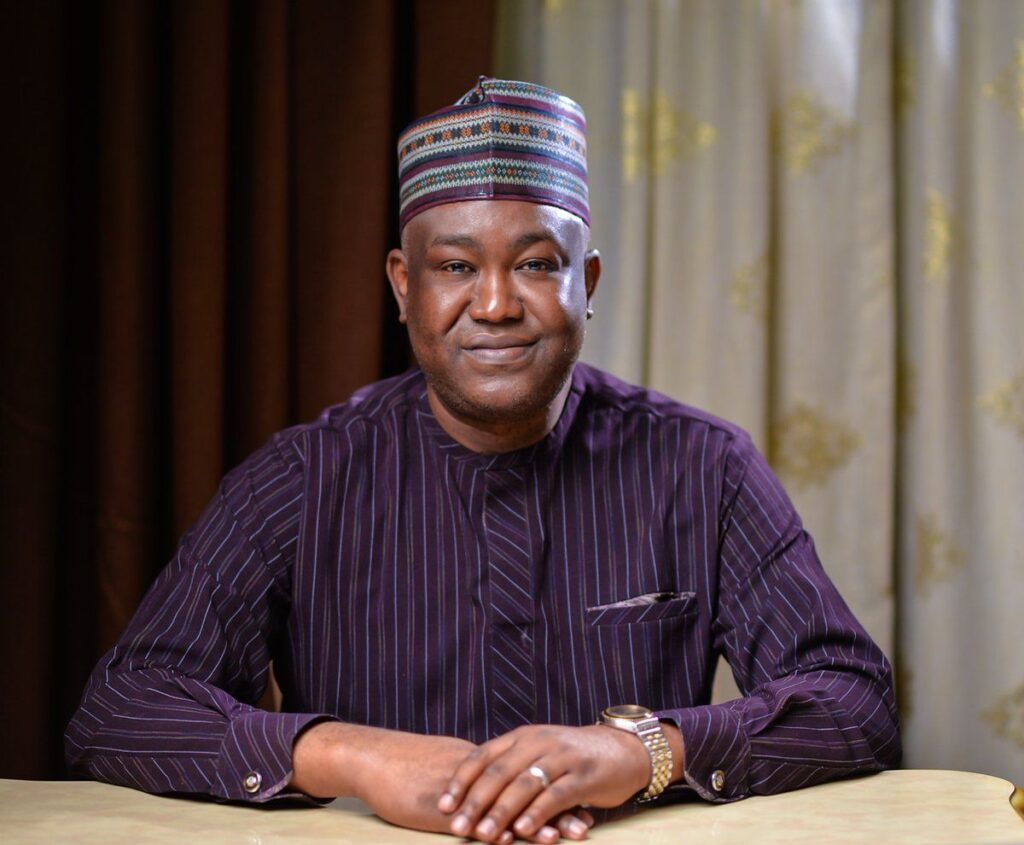
FELIX NWANERI writes on the recent separate visits by a former presidential candidate and Peoples Democratic Party (PDP) presidential hopeful to ex-President Olusegun Obasanjo and former Military President, General Ibrahim Babangida ahead of the 2027 elections
The recent visits by a Peoples Democratic Party (PDP) presidential hopeful, Dr. Gbenga Olawepo-Hashim to two of Nigeria’s most influential elder statesmen – former Military President, General Ibrahim Badamasi Babangida and former President Olusegun Obasanjo have sent shockwaves across Nigeria’s political landscapes.
The closed-door meetings are part of Olawepo-Hashim’s ongoing nationwide engagements with elder statesmen and key national figures to discuss the future of Nigeria. Sources familiar with the consultations said the PDP chieftain assured both former leaders of his capacity to tackle Nigeria’s security challenges, rebuild national unity, stabilise the polity and restore economic prosperity.
Both Obasanjo and Babangida, though non-partisan, are widely regarded as influential elder statesmen, who remain deeply invested in Nigeria’s unity and stability, having played defining roles in the country’s political and military history.
During the Minna meeting between Babangida and Olawepo-Hashim, the presidential hopeful reportedly reflected on the former military president’s historic role in preserving Nigeria’s unity. He also referenced the sacrifices made by Babangida during the civil war. “General, you still carry in your body the wounds of the war fought to keep Nigeria one. Many of your colleagues were not fortunate to survive that struggle.
If Nigeria is allowed to disintegrate today through incompetent leadership, then the sacrifices of patriots like you would have been wasted,” Olawepo-Hashim was quoted as saying. Analysts agree that these engagements are not just casual courtesies but calculated, visionary, and deeply strategic moves that signal preparedness, depth and statesmanship ahead of the 2027 general elections.
They further opined that the visits have left many presidential aspirants visibly jittery as those who understand power dynamics know exactly what this moment represents. “Dr. Olawepo-Hashim is not new to the Nigerian political terrain.
As a master strategist with decades of experience in activism, policy advocacy, political organization, and national engagement, he understands that leadership is not built in isolation, nor is national consensus forged in haste.
“By engaging General Babangida and President Obasanjo, two leaders who have shaped Nigeria’s political evolution in different eras, Olawepo-Hashim is demonstrating a rare appreciation for institutional memory, political wisdom, and the necessity of bridging generations,” one of the analysts said.
Another analyst, who spoke on the move said: “The visits reflect something many contenders lack: foresight. While others are still busy with media noise, premature declarations, and superficial alliances, Dr. Olawepo-Hashim is quietly but deliberately laying the foundation for a broad national consensus.
Engaging both men signals Olawepo-Hashim’s understanding that Nigeria’s challenges, economic instability, insecurity, youth unemployment, national cohesion, and global relevance, require depth, not drama
He is thinking ten steps ahead, consulting, listening, learning, and aligning Nigeria’s past experiences with the urgent demands of its future.” General Babangida, he argued, “represents strategic statecraft, geopolitical balancing, and institutional intelligence, while President Obasanjo embodies democratic transition, international diplomacy, and reform driven leadership.
“Engaging both men signals OlawepoHashim’s understanding that Nigeria’s challenges, economic instability, insecurity, youth unemployment, national cohesion, and global relevance, require depth, not drama,” he said. The analyst maintained that “for the youth, this move is reassuring. It shows that their future is being planned with wisdom, not recklessness.
For the political class, it is unsettling because it confirms that Olawepo-Hashim is not running a reactionary campaign, but a well-thoughtout national project.” According to Mrs. Shakinat Mohammed, the Federal Capital Territory (FCT) coordinator of the Hashims, “the road to 2027 will not be won by noise-makers or opportunists. It will be won by those who understand Nigeria in its totality as well as its past, its present and potential.
She added that OlawepoHashim’s visits have made one thing clear: the race has truly begun, and a serious contender has stepped decisively onto the field. Recall that Olawepo-Hashim has repeatedly emphasised that the 2027 presidential election must be centred on national rescue, warning that continued leadership failure could further endanger the country’s cohesion and stability.
Meanwhile, Olawepo-Hashim has described the recent United States airstrikes targeting Islamic State (IS) elements operating within Nigeria as a damning indictment of the country’s security architecture, blaming what he called the persistent failure of governance under President Bola Tinubu and the All Progressives Congress (APC)-led administration.
In a statement by his media office, he said the US intervention reflects growing international concern over Nigeria’s deteriorating security situation, particularly in the North-West, where terrorist groups are steadily consolidating their influence. According to the former presidential candidate, responsible global actors cannot afford to ignore the emergence of an IS foothold in Nigeria, stressing that the country is “too large, too strategic, and too important to be allowed to fail.”
Olawepo-Hashim revealed that since 2021, and more intensely over the past year, his team had repeatedly warned that security modelling in the North-West pointed towards a dangerous trajectory, including the potential emergence of an IS-aligned enclave if urgent action was not taken. He attributed the worsening insecurity to deepening poverty, prolonged governance failure, and weakened institutions, which he said have emboldened extremist groups while silencing moderate political and secular voices across the region.
“More worrying is the elevation of individuals who enable or rationalise extremism into positions of political influence, creating conditions under which terror groups can aspire to territorial control,” he stated. While acknowledging that international airstrikes may temporarily degrade terrorist capabilities, Olawepo-Hashim stressed that lasting solutions can only come from within.
He added that as external interventions are not expected to be one-off actions, the mechanisms guiding them must be carefully negotiated within the framework of security cooperation between sovereign nations, with clear accountability structures and transparent reporting measures to prevent abuse and ensure long-term stability
“The situation in the North-West is dire. Without urgent internal reforms, improved governance, and decisive political leadership, external military interventions will not produce sustainable results,” he warned.
He further questioned the readiness of the APC-led government to undertake the critical internal reforms needed to stabilise the country, arguing that Nigeria continues to grapple with fundamental governance and security deficits that threaten its democratic future.
He also alleged that the government’s apparent reluctance to act decisively may stem from political compromises made during the 2015 struggle for power, compromises he said now constrain its ability to confront extremist elements head-on. Concluding, Olawepo-Hashim warned that Nigeria can no longer afford denial or half-measures in the face of what he described as an existential threat, calling for urgent, courageous leadership to prevent further deterioration of national security.