

- LG Autonomy: Ripples over issuance of Executive Order to compel compliance
TUNDE OYESINA writes that the threat by President Bola Tinubu to issue an Executive Order against state governors who continue to frustrate the implementation of local government autonomy has elicited mixed reactions from lawyers
The threat by President Bola Tinubu to issue an executive order against state governors who continue to frustrate the implementation of local government autonomy has sparked debate among lawyers. Although, the legal community is largely united in its call on governors to, as a must, obey the Supreme Court judgement on local government financial autonomy.

However, lawyers differ on whether the issuance of an Executive Order is the most appropriate enforcement mechanism, even though there is near unanimity among them that continued resistance by governors amounts to a breach of the Constitution and a dangerous assault on the rule of law.
The emerging consensus among lawyers is that the issue has moved beyond politics into the realm of constitutional obedience, judicial authority, and the survival of grassroots governance. President Tinubu, had last week, warned state governors that he may issue an Executive Order to enforce direct allocation of funds to LGs if they fail to comply with the supreme court’s ruling on financial autonomy.
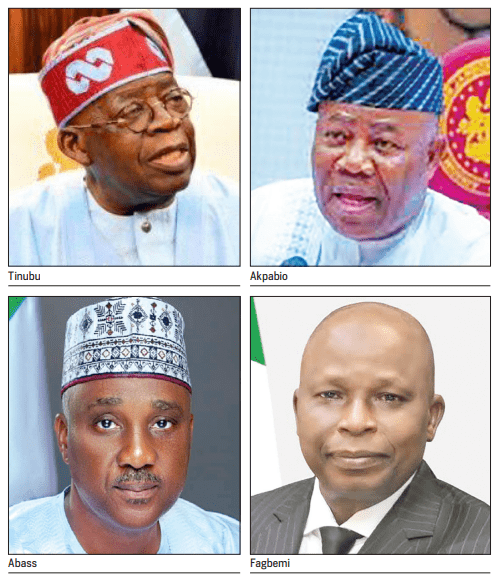
The president issued the warning while speaking at the 15th National Executive Committee (NEC) meeting of the All Progressives Congress (APC) at the State House Conference Centre in Abuja. In a veiled reference to governors withholding statutory allocations meant for local councils, the president said non-compliance could force him to ensure direct disbursement of LG funds from the Federation Account Allocation Committee (FAAC).
Addressing NEC members, including governors and members of the National Working Committee (NWC), Tinubu said he had so far exercised restraint in dealing with the governors on the matter. “The supreme court has capped it for you again, saying, ‘give them their money directly. If you wait for my executive order, because I have the knife, I have the yam, I will cut it. “I’m just being very respectful and understanding with my governors. Otherwise, if you don’t start to implement it, fact after fact, you will see”, he said.
In a related development, the Attorney General of the Federation and Minister of Justice, Prince Lateef Fagbemi (SAN), had earlier stated that any state governor who tampers with funds belonging to local government will be guilty of gross misconduct, which is an impeachable offence. The AGF made the statement at the 2024 annual conference of the National Association of Judiciary Correspondents (NAJUC), Abuja chapter.
He, however, warned the chairmen of the 774 LGAs across Nigeria against mismanaging local government funds. Fagbemi, in his paper titled, “Aftermath of Supreme Court judgement on Local Government Financial Autonomy: What Next?, said, “By the July 11, 2024 judgement of the Supreme Court, which granted financial autonomy to LGAs in the country, any governor who tampers with the finances of the LGAs in his state is seen to have committed a gross misconduct, which is an impeachable offence”. Fagbemi, while highlighting the critical role local governments play in delivering grassroots development, urged council chairmen and other officials to prioritize their constitutional duties. “Primary education must be accessible to every child.
Pregnant women and infants must receive quality healthcare, and the vulnerable in the society must benefit from sustainable welfare programmes,” he said. He noted that the financial autonomy granted to local governments by the Supreme Court was designed to empower them to carry out their responsibilities effectively.
However, he said, if any local government chairman chooses to misuse public funds and fail to deliver on his or her constitutional mandates, such local government chairman risks going to jail, adding that local government chairmen do not have immunity like state governors. He added that any debt incurred by governors, in relation to the official function of state government must be handled by the state, it should not be shared with the local government areas, as such projects are not the constitutional responsibilities of local governments.
Supreme Court judgement
New Telegraph Law recalls that the Supreme Court had on July 11, 2024 okayed full autonomy for the 774 Local Government Areas in the country. The apex court consequently ordered that funds from the federation account in the credit of the councils must be paid directly to their respective bank accounts. The court also barred state governors and their privies from directly or indirectly receiving, tampering or withholding funds meant for local governments henceforth. In addition, the court barred governors from dissolving democratically elected officials of local government .
In the lead judgement delivered by Justice Emmanuel Agim, the Federation Account was specifically ordered to ensure that henceforth all monies including shares from taxes and other sources are channelled directly into the purses of councils with democratically elected officials in place. The governors were also barred from henceforth dissolving democratically elected officials for local governments and that doing so would amount to a breach of the 1999 Constitution.
In the unanimous judgement of the 7-man panel of Justices, the Supreme Court agreed with the Attorney General of the Federation and Minister of Justice, Prince Lateef Fagbemi (SAN), that the Constitution of the Federal Republic of Nigeria recognized local governments as the third tier of government. The Justices also agreed with him that some state governors have in the past two decades been using Nigeria’s Constitution to perpetrate unconstitutional acts. The argument of Fagbemi that the Constitution permitted governors to receive money on behalf of local governments, but did not permit them to spend such money on their behalf was upheld.
Among others, the apex court ordered the Federation Account to withhold funds of local governments where democratically elected officials are not in place. Fagbemi had on May 24, 2024 on behalf of the Federal Government dragged the 36 governors before the Supreme Court over alleged misconduct in the running of affairs of local governments in the country. The Attorney General instituted the court action against the governors primarily seeking full autonomy for local governments as third tiers of government in the country.
In the suit marked SC/ CV/343/2024, the AGF had prayed the apex court for an order prohibiting state governors from unilateral, arbitrary and unlawful dissolution of democratically elected local government leaders for local governments. In the originating summons he personally signed, Fagbemi also prayed the Supreme Court for an order permitting the funds standing in the credits of local governments to be directly channelled to them from the Federation Account in line with the provisions of the Constitution as against the alleged unlawful joint accounts created by governors.
He also sought the apex court’s order stopping governors from constituting Caretaker Committees to run the affairs of local governments as against the Constitutionally recognized and guaranteed democratically system. Besides, the AGF applied for an order of injunction restraining the governors, their agents and privies from receiving, spending or tampering with funds released from the Federation Account for the benefits of local governments when no democratically elected local government system is put in place in the states.
The governors who were sued through their respective State Attorneys General demanded dismissal of the suit on the ground that the Supreme Court has no jurisdiction to adjudicate on the matter and that the suit did not disclose any reasonable cause of action against them. The request for dismissal was however rejected by the Justices for being frivolous vexatious and lacking in merit.
The suit was predicated on 27 grounds among which are that the Nigeria Federation is a creation of the 1999 Constitution with President as Head of the Federal Executive arm of the Federation and has sworn to uphold and give effects to the provisions of the Constitution.
“That the governors represent the component states of the Federation with Executive Governors who have also sworn to uphold the Constitution and to at all times,give effects to the Constitution and that the Constitution, being the supreme law, has binding force all over the Federation of Nigeria. “That the Constitution of Nigeria recognizes federal, states and local governments as three tiers of government and that the three recognized tiers of government draw funds for their operation and functioning from the Federation Account created by the Constitution.
“That by the provisions of the Constitution, there must be a democratically elected local government system and that the Constitution has not made provisions for any other systems of governance at the local government level other than democratically elected local government system”. “That in the face of the clear provisions of the Constitution, the governors have failed and refused to put in place a democratically elected local government system even where no state of emergency has been declared to warrant the suspension of democratic institutions in the state.
“That the failure of the governors to put democratically elected local government system in place, is a deliberate subversion of the 1999 Constitution which they and the President have sworn to uphold. “That all efforts to make the governors comply with the dictates of the 1999 Constitution in terms of putting in place, a democratically elected local government system, has not yielded any result and that to continue to disburse funds from the Federation Account to governors for non existing democratically elected local government is to undermine the sanctity of the 1999 Constitution.
Lawyers speak
In a write-up on the enforceability of the Supreme Court’s judgement, a former Chairman of the Board of the National Human Rights Commission (NHRC), Prof. Chidi Odinkalu, maintained that the issue of local government accounts are more complex than people think it is. He posited that the judgement would only alter the means through which the governors get the funds, as they install local government chairmen in rigged elections.
“A local government chairman who has been installed in a rigged election controlled entirely by the governor will give the fund back to the governor. What this person is going to do is to collect the money and hand it back to the governor.
So, all they are doing is altering the sequence by which the money will go back to the governor. But the money still goes back to the governor. “And the reason the money will go back to the governor is because the mandate as a matter of jurisprudence set up by the Supreme Court is not with the people. The mandate is in the politicians’ hands. Until we address this, we are wasting time and efforts.
“If they said that they will not give money to caretaker chairmen, the president (Bola Tinubu) went through the same thing with Obasanjo. Obasanjo held up their money when he (Tinubu) was the governor of Lagos State. If that is the consequence they want to live with, they want to afflict others with, we live by the swing of the pendulum. It may take one decade or 20 years, but it will turn around.”
In his views, a senior lawyer, Emmanuel Ekwe, said: “as a lawyer and a citizen, I consider the Supreme Court judgement on local government autonomy to be final, binding and non-negotiable. By virtue of Section 287 of the Constitution, all authorities and persons are duty-bound to obey it. Any continued refusal by state governments to comply is not just unlawful, but a direct challenge to the authority of the judiciary and the rule of law.
“However, I do not believe that compliance should be driven purely by threats of executive orders. The more effective path is for the Federal Government and its relevant agencies — especially the Office of the Accountant-General and the Central Bank — to simply implement the judgement by ensuring that local government allocations are paid directly to them as ordered by the court.
Once the financial structure is corrected, the culture of compliance will follow. “I also think that local governments themselves, civil society groups and the media have a responsibility to insist on obedience to the judgement through lawful pressure, public accountability and, where necessary, by approaching the courts again for enforcement and contempt proceedings against defiant officials.
Court judgments do not enforce themselves; democratic societies must insist that they are respected. “Ultimately, I see local government autonomy not as a threat to governors, but as a constitutional reform whose time has come. It is meant to strengthen grassroots governance, improve service delivery and deepen our federal democracy. Compliance should therefore be embraced as a constitutional duty and a national necessity, not resisted as a political inconvenience”.
In his comments, another senior lawyer, Dauda Badams, opined that; “to aid compliance with the Supreme Court judgement granting local government autonomy, Nigeria must move beyond rhetoric to lawful, enforceable action that respects constitutional federalism. “Judicial enforcement, not hust political warnings. The decision of the Supreme Court of Nigeria is final and binding under Section 287 of the Constitution.
What will truly compel obedience is enforcement, not persuasion. “The Attorney-General of the Federation should initiate contempt proceedings against defaulting states. Affected local governments should be supported to file enforcement and garnishee proceedings. Once personal liability and legal consequences loom, compliance becomes more likely. “While Bola Ahmed Tinubu cannot legislate by executive order on state matters, he can lawfully direct federal agencies to pay LG allocations directly from the Federation Account.
“The National Assembly should enact laws criminalizing diversion or control of LG funds by state actors. Prescribe clear sanctions for violations, removing ambiguity in implementation”. A rights activist, Olusola Adesina, queried governors’ refusal to comply with the apex court’s judgement, saying the action not only undermines judicial authority, but also perpetuates inefficiencies in service delivery, such as in education, health, and infrastructure at the local level.
“From a politico-legal perspective, enforcing compliance requires a blend of coercive legal mechanisms, strategic political maneuvering, and institutional reforms to minimize backlash and ensure sustainability. “To aid adherence, as President Tinubu has threatened, an executive order under Section 5 of the Constitution could direct the Federation Account Allocation Committee (FAAC) to remit LG funds directly to their accounts, bypassing state joint accounts.
“To make this effective, the order should include clear timelines, monitoring protocols via the Central Bank of Nigeria (CBN), and penalties for obstruction (e.g., withholding federal grants to non-compliant states). “Legally, this aligns with the Supreme Court’s interpretation of Sections 162(3)-(8) of the Constitution, which emphasize fiscal federalism. However, to avoid constitutional challenges, the Attorney General of the Federation (AGF) should preemptively seek a declaratory judgement from the Supreme Court affirming the order’s validity, citing precedents like the 2002 case on resource control (AG Federation v. AG Abia State).
“The AGF or affected LG chairmen could initiate contempt actions against recalcitrant governors in the Supreme Court, invoking Order 3 Rule 6 of the Supreme Court Rules. This would impose personal sanctions, such as fines or imprisonment, on governors, creating a deterrent effect. “On the political front, this should be selective, targeting egregious violators first to avoid alienating the entire Governors’ Forum and framing it as upholding the rule of law, rather than as federal overreach.
“Push for amendments to the Revenue Mobilization Allocation and Fiscal Commission Act or the Constitution itself to codify direct payments and establish an independent LG oversight body. “Convene a high-level summit involving the Nigeria Governors’ Forum (NGF), the Association of Local Governments of Nigeria (ALGON), and federal officials, facilitated by neutral bodies like the National Council of State.
This politico approach could address governors’ concerns (e.g., fears of LG fiscal irresponsibility leading to state bailouts) by offering incentives, such as federal technical support for LG capacity-building or conditional debt relief for compliant states. “Drawing from game theory, this “carrot-and-stick” strategy reduces zero-sum confrontations, as seen in past resolutions like the 2019 minimum wage negotiations”, Adesina said.









