

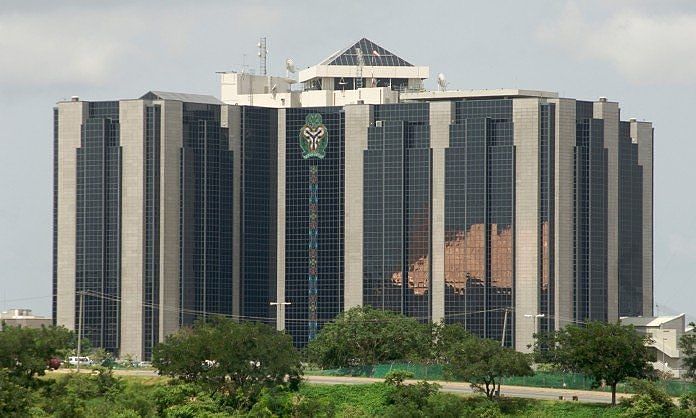
Nigeria’s external reserves grew by $4.39bn between December 23, 2024, and December 23, 2025, according to data sourced from the Central Bank of Nigeria.
The PUNCH’s analysis of the data indicated that the reserves increased by approximately 10.75 per cent within the period under review.
As of Tuesday, December 23, the FX reserves stood at $45.24bn, higher than $40.85bn on the same day last year. The reserves have maintained an upward trajectory in the last few months of the year, although there were periods of decline.
The external reserves closed 2024 at $40.87bn and dipped to $39.72bn in January 2025. They fell further to $38.41bn in February, continued the downward trend in March to $38.30bn, and declined to $37.93bn in April. The drop in reserves during this period was attributed to increased debt-servicing commitments.
In a statement during this period, the CBN said, “Reserves have continued to strengthen in 2025. While the first-quarter figures reflected some seasonal and transitional adjustments, including significant interest payments on foreign-denominated debt, underlying fundamentals remain intact, and reserves are expected to continue improving over the second quarter of the year.”
Data from the CBN revealed that Nigeria’s total debt service payments amounted to $540m in January 2025 and $276m in February 2025. This means that a total of $816m was spent on foreign debt servicing in the first two months of the year, The PUNCH reported.
In May, the reserves clawed back some gains to settle at $38.45bn, but those gains were erased in June as the reserves closed at $37.21bn. This wrapped up a first half in which external reserves shed $3.67bn due to debt servicing and the CBN’s interventions in the foreign exchange market.
In the second half of the year, the reserves maintained steady appreciation, rising to $39.35bn in July and crossing the $40bn mark in August to close at $41.30bn. They appreciated by about two per cent in September to close at $42.35bn.
The upward movement continued in October to $43.19bn, while in November the reserves closed at $44.66bn. The accretion continued into December until the 15th day of the month, when the first decline in over two months was recorded.
The reserves dropped to $45.32bn from $45.47bn. Thereafter, they fell to $45.27bn before a day-on-day decline of $57.05m brought them to $45.21bn as of December 17, 2025. Some of the losses have since been recovered, with the reserves standing at $45.24bn as of Tuesday.
Providing insight into the growth in the FX reserves in October, the CBN Governor, Olayemi Cardoso, said the clearing of the foreign exchange backlog and sustained efforts to improve transparency in the FX market were instrumental.
The PUNCH reported that Cardoso made the remarks at the inaugural CBN Governor Annual Lecture Series held at the Lagos Business School under the theme, ‘Next Generation Leadership in Monetary Policy and Nation Building.’
He stressed that credibility and trust were essential to attracting long-term investment, saying, “If we are a going concern, and if we expect people to trust and invest in our economy, we must keep our promises. That action contributed in no small way to the rise in our reserves. People invest when they see credibility and transparency.”
In November, The PUNCH reported that the CBN governor said Nigeria’s foreign reserves had surged to their strongest level in seven years, hitting $46.7bn as of November 14, 2025. Cardoso, who was represented by the Deputy Governor in charge of Economic Policy, Dr Muhammad Abdullahi, said the reserves had reached a new high for the first time since 2018, attributing the resurgence to renewed investor confidence, improved oil receipts, and stronger balance-of-payments inflows.
While not entirely enthusiastic about the sources of accretion to the FX reserves, the Managing Director of Financial Derivatives, Bismarck Rewane, said robust reserves would support FX supply and reduce pressure on the naira.
Speaking at the annual Parthian Economic Discourse 2025 held in late November, Rewane said, “External reserves must be viewed in the context of debt. The recent rise in reserves was due to the Eurobond issuance.”
He added that while diaspora remittances had become an important support for the FX reserves, they were being threatened by AI-induced job losses among Nigerians abroad.
In their macroeconomic review, analysts at Afrinvest Research commended the Cardoso-led CBN for its innovations in the FX market, which they said had supported the external reserves.
“With a net addition of roughly $4.4bn between January and November 2025, foreign reserves hit a multi-year high of $45.4bn on December 9, 2025, implying nearly 11 months of import cover versus an eight-month comfort-level floor for low-income countries,” they said, while cautioning that the pre-election year could prompt investors to adopt a more cautious stance toward the Nigerian market.