



The Federation Account Allocation Committee has continued its investigation into the Road Infrastructure Tax Credit Scheme, as only three out of seven participating companies have responded to requests for details on their involvement, expenditure, and project execution under the programme.
This was disclosed in the report of the FAAC post-mortem sub-committee meeting for November 2025, which reviewed deductions made for the scheme between February 2024 and September 2025.
The document was obtained by our correspondent on Sunday. According to the document, the sub-committee wrote to the Federal Ministries of Finance and Works, the Federal Inland Revenue Service, as well as firms participating in the scheme, seeking information on “the level of involvement in the scheme, the amount spent and the level of the ongoing projects from 2019 to 2025.”
The companies contacted were BUA International Limited, Dangote Cement Company Limited, Nigerian National Petroleum Company Limited, Nigeria Liquefied Natural Gas Limited, Mainstream Energy Solutions, GZ Industries Limited, and MTN Nigeria Limited.
However, the report noted that compliance has been poor. “The Sub-Committee had received responses from three of these participating companies, which were forwarded to FIRS for confirmation,” the document stated.
It added that the exercise remains incomplete, stressing that further responses were required before conclusions could be drawn. “The Ad-hoc Committee is still expecting the remaining companies’ response in order to conclude the assignment and report back. This assignment is still a work in progress,” the report read.
The tax credit programme has been key to funding major road projects without immediate government expenditure. However, concerns persist regarding the long-term impact of such revenue forfeitures, particularly as the country faces economic pressures.
At its August 2024 meeting, FAAC members called for a suspension of the deductions, emphasising that the responsibility of road construction lies with the Federal Government.
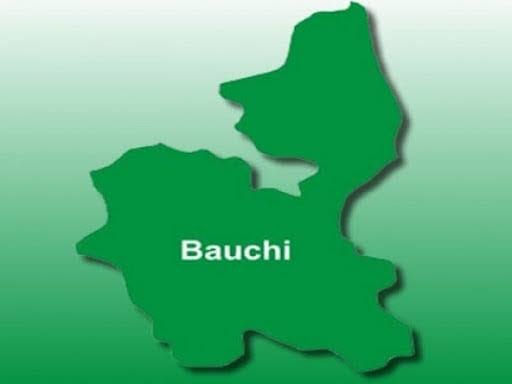
Also, at the FAAC Plenary meeting held in Bauchi, NNPCL was requested to suspend further deduction pending the resolution of the contentious issue surrounding the scheme. They argued that their share of the deduction should be calculated based on the existing Revenue Allocation Sharing Formula and refunded accordingly.
To address the concerns, the Chairman of the Revenue Mobilisation Allocation and Fiscal Commission formally requested detailed information from the FIRS on the tax credits granted to NNPCL and other organisations involved in the scheme.
Despite the incomplete submissions, FAAC disclosed that substantial deductions had already been applied under the scheme within the review period. The document revealed that a total of $577,604,432.08 and N822,309,022,528.59 was deducted for the Road Infrastructure Tax Credit Scheme between 2024 and 2025.
A breakdown showed that $52.51m was deducted monthly from the NNPCL’s FIRS Joint Venture gas Companies Income Tax from February to December 2024, resulting in a cumulative $577.6m by the end of the year.
Although no further dollar deductions were recorded in 2025, the naira component reflected heavy charges, including N151.27bn in February 2025 and N671.04bn in April 2025, bringing the total naira deductions to N822.31bn as of September 2025.
FAAC cautioned that the figures reviewed do not represent the full extent of the scheme’s impact on federally collectable revenue. “Note that this does not include other agencies that are benefiting from the scheme before 2024,” the report stated, suggesting that actual deductions may be significantly higher.
The Road Infrastructure Tax Credit Scheme, introduced by the Federal Government in 2019, allows private sector companies to construct or rehabilitate approved federal roads and recover their investments through tax credits offset against their Company Income Tax obligations.
The scheme, jointly supervised by the Ministries of Finance and Works, with implementation oversight by the FIRS, was designed to accelerate road development amid dwindling public funds and rising infrastructure deficits.
Under the arrangement, tax credits granted to participating firms are deducted at source from revenues accruing to the Federation Account, a development that has repeatedly triggered concerns from state and local governments, who argue that it reduces funds available for monthly FAAC distribution.
The ongoing FAAC post-mortem review reflects growing scrutiny over the scale of deductions, transparency of project execution and accountability of participating firms, as revenue pressures continue to mount across all tiers of government.
The scheme was used as pilot funding for the completion of the 32-kilometre Apapa-Oshodi-Oworonshoki-Ojota expressway. In 2023, the government approved N1.535tn under Phase 2 of the NNPCL tax credit scheme.
This was after the national oil company announced that it would spend N1.9tn in the second phase of the tax credit scheme for infrastructure development.
At an emergency meeting with directors and contractors held at the ministry headquarters last week, the Minister of Works, David Umahi, announced a major overhaul of payment arrangements for road projects executed under the Nigerian National Petroleum Company Limited, declaring that participating companies will no longer receive payments through NNPC.
He also clarified that contractors must exit existing tripartite agreements before they can receive government-approved payments for completed road projects. “So let’s talk about NNPCL projects. Some of you are involved in NNPCL projects,” the minister said.
“The President has directed that all the inherited NNPCL projects must continue. But NNPCL is not going to pay you again. They will no longer be the one paying you. The Ministry of Works will be the one paying you,” he added.
Umahi said the new arrangement was necessary to remove ambiguities surrounding project funding and ensure uniform understanding among contractors. “I need to make myself very clear so that contractors who are going to ask questions are going to be able to get answers, and we can all leave this place with the same mind,” he said.
According to the minister, ongoing NNPC-backed road projects will be re-scoped and segmented, with contractors assigned portions they can realistically complete within a defined timeframe.
“The projects are going to be re-scoped in sections. If you have 150 kilometres dualised, we can’t engage you to do 150 kilometres dualised. We want what you can finish in nine months,” Umahi stated.
He also announced a sweeping reorganisation of the Ministry of Works to ensure closer supervision of project execution.
“So, NNPC projects, we are going to engage. And let me make it very clear that the Ministry of Works is going to be fully reorganised. All of these directors you see in your offices and everywhere, everybody is going to go to the field. Only the Permanent Secretary and I will stay in the office,” he said.
Umahi further explained that the Permanent Secretary would formally notify contractors to terminate the existing tripartite funding structure involving NNPC, the Federal Ministry of Finance, or the Federal Inland Revenue Service.
“The Permanent Secretary is going to write to all the contractors and direct them to exit the NNPCL and Ministry of Finance or FIRS arrangement. They will now sign an agreement with the Ministry of Works,” he said.
“We are not cancelling your contracts. They are no longer funded. The President has said the Ministry of Works will fund them. But we have to exit the tripartite agreement. If you have to ask, you have to act,” the minister added.
On outstanding payments, Umahi disclosed that President Bola Tinubu had approved the settlement of certified NNPCL-funded road projects valued at about N263bn. “The names of the certificates of NNPCL that the President has graciously approved that you should be paid, that’s NNPCL-funded projects, he has directed NNPCL to pay the amount,” he said.
“The total amount is about N263bn. He has directed them to liaise with FIRS and get you paid. That process is on, and you are going to get your funds,” Umahi added.
He stressed that exiting the tripartite agreement remained a mandatory condition for contractors to access the approved payments. “And of course, all contractors have to exit the tripartite agreement to get paid. It’s very important,” the minister concluded.