



The year 2025 will go down in the annals of Nigeria’s as one of the most eventful ones. Besides the death of former President Muhammadu Buhari and statesmen like Chiefs Edwin Clark and Ayo Adebanjo, JOHNCHUKS ONUANYIM chronicles political activities which marked out the year ahead of the 2027 elections.
For so many, 2025 was a decision year ahead of the victory of 2027 general elections. Many political activities occurred in the year and most were in favour of the ruling All Progressives Congress (APC). The party witnessed so many defections in its favour and won many bye-elections conducted.
First was the Ondo State governorship election which produced Governor Lucky Aiyedatiwa followed by the bickering in the Peoples Democratic Party, (PDP), over the party’s leadership with the then Acting National Chairman, Umar Damagun and National Secretary, Senator Samuel Anyanwun.
The imbroglio has since decimated the party leading to the defection of many of its governors and lawmakers. As a ruling party, APC did not fail to show its ability to do and undo, as many opposition governors were falling on top of each other to make sure that they were identified with APC, especially as regards exploiting the divisions in the other parties.
Mass Defections
In 2023, after the general elections, the total number of states won and controlled by APC were not up 20 but today, the party controls over 27 governors over the defection of the governors to the APC. This is also so in the National Assembly, specifically the Senate, where most opposition Senators have defected into APC.
The surge of defection was captured as, “2025 will be remembered as a year opposition parties and other stakeholders expressed fear of Nigeria becoming a one-party country. This was due to the rise in defections to the APC across the nation. “The most hit political party is the PDP.
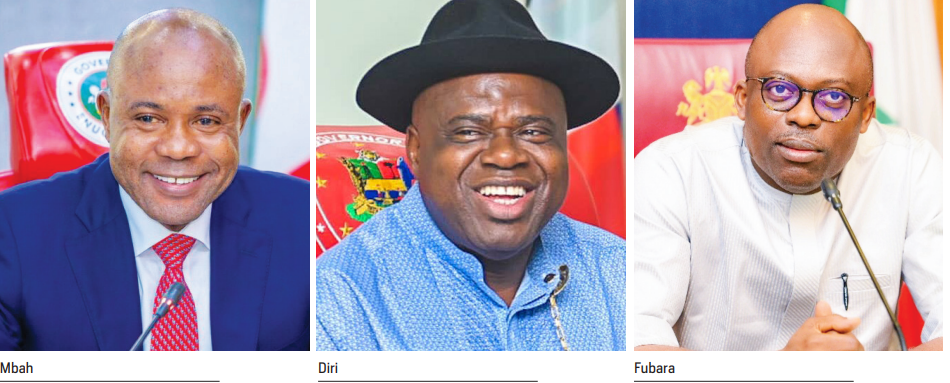
Notably, the PDP lost seven of its governors to the APC within weeks. The defectors included Rivers Governor Siminalayi Fubara, Enugu Governor Peter Mbah, Delta Governor Sheriff Oborevwori, Bayelsa Governor Douye Diri, Akwa Ibom Governor Umo Eno, Taraba Governor Agbu Kefas, and Plateau State Governor, Caleb Mutfwang.
“The trend also occurred in the rank of National and State lawmakers as several legislators dumped PDP, Labour Party, and NNPP to the APC.” The defections were being alleged to have come with serious rewards and threat of loss of election in 2027.
Since the main opposition political parties – Peoples Democratic Party and Labour Party – were the worst hit, they decided to form a coalition under another political party. The choice of a political party was a problem. Their first alleged choice was the Social Democratic Party (SDP).
This was so as the former Kaduna State governor, Malam Nasir el-Rufai had moved into the party. El-Rufai movement into the SDP and the allegations of opposition hijacking the party brought also a crisis in the party.
To resist the coalition members taken over the party, crises were allegedly created in the party by the former Presidential candidate of the party, Prince Adewole Adebayo and some National Working Committee (NWC) members, which led to the suspension of the SDP National Chairman, Alhaji Shehu Gaban. Gaban was later expelled from the party.
The furore in SDP led to the coalition moving to the Africa Democratic Congress (ADC). Before the movement to ADC, the coalition also considered the formation of a new political party, which they accused the former INEC Chairman, Prof. Mahmud Yakubu of frustrating. The party that was mentioned then was ADA.
After a long political meeting, then came the emergence of the ADC coalition: A neutral political force, the African Democratic Congress. It came forth as Nigeria’s opposition parties grappled with internal division and waning cohesion. The party, according to political pundits, is positioning itself as a third force political platform for key contenders seeking to challenge President Tinubu in the 2027 election.
However, some APC members and the Presidency, including the former Director General of the Voice of Nigeria, Osita Okechukwu have dismissed the notion of ADC defeating APC in 2027. According to them, ADC is a spent forth party made up of failed politicians. Also, of concern to many Nigerians and political pundits is the inability of the ADC to categorically zone its Presidential ticket to the South.
This to them has weakened the take-off of ADC. Just as the opposition coalition members were strategizing, the ruling APC was also doing so. The APC was considering what to do to win the 2027 general election. One of such considerations was to drop the Vice President, Senator Kasshim Shettima and for President Bola Ahmed Tinubu to pick another candidate.
This plot was majorly hatched by some APC members of the North East but it could fly as some governors from the zone resisted the plot. The second plot to strengthen APC for the 2027 election was to change the National Chairman of the party.
The North Central felt short changed when the former governor of Nasarawa State, Senator Abdullahi Adamu was removed in 2023 and the former governor of Kano, Alhaji Abdullahi Ganduje was brought in as the APC national chairman.
The position of the APC National Chairman in 2022 was zoned to the North Central and Sen. Adamu who won in 2022 was removed in 2023 with a replacement from the North-West. The North Central kept on agitating to complete their tenure in the leadership of APC.
In July this year that opportunity came as the APC National Chairman, Abdullahi Ganduje resigned. His resignation, which was controversial in nature brought another replacement from the North Central, Prof. Nentewa Yiltdawa from Plateau State.
Yiltdawa, former governorship candidate of APC in Plateau State was brought to have a Christian balance in the party, party members said. Before his selection, APC government has been accused of Muslim domination.
In the party structure, it has always been a Christian National Chairman and Muslim National Secretary or vice versa but when President Tinubu came, he brought in Muslim National Chairman and National Secretary in the persons of Alhaji Abdullahi Ganduje and Senator Surajudeen Ajibola Basiru. Prof. Yiltdawa selection reversed the lopsidedness.
Ministerial resignations
In the year under review, three Ministers resigned from their portfolios. Some of the exits were greeted with scandal and controversy. On July 24, Nentawe Goshwe Yilwatda resigned as the Minister of Humanitarian Affairs and Poverty Reduction.
He stepped down from his cabinet role after winning the APC chairmanship. The second person was Uche Geoffrey Nnaji, who stepped down as the Minister of Innovation, Science and Technology in October.
Nnaji stepped down after intense media and legal pressure arising from allegations that documents he submitted during his Senate screening, particularly academic and NYSC credentials were inconsistent or were falsified, The third is former governor of Jigawa State, Mohammed Badaru Abubakar, who resigned on December 1 as Minister for Defence. His resignation came amid mass kidnappings, banditry and escalating insurgent attacks.
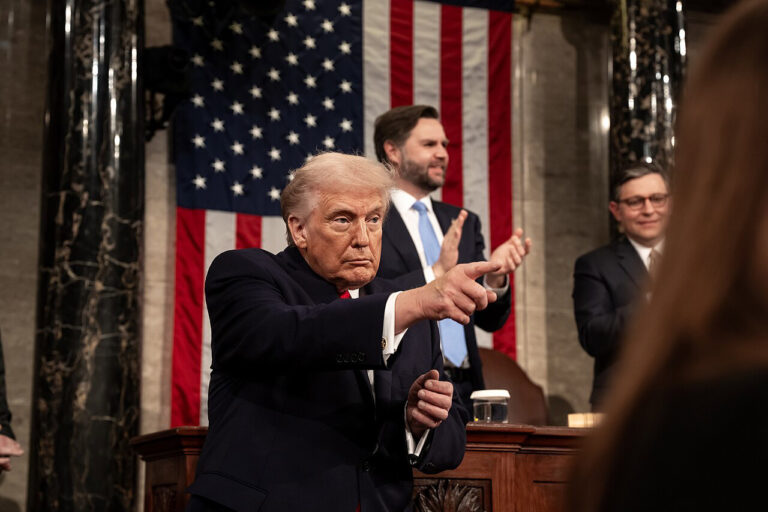
The resignation of the former Defence Minister came after the allegations of Christians genocide that attracted American President Donald Trump classifying Nigeria as Country of Particular Concern’ and threaten military action.
The US President claimed that “Christianity is facing an existential threat in Nigeria. Thousands of Christians are being killed. Radical Islamists are responsible for this mass slaughter. Another major political event in the year 2025 was the legislative bye- elections.
The ruling All Progressives Congress (APC) claimed a decisive win in the-elections held in 16 constituencies across 12 states of the federation, emerging victorious in 12 constituencies.
All Progressives Grand Alliance (APGA) won two constituencies, while Peoples Democratic Party (PDP) and New Nigeria Peoples Party (NNPP) gained the upper hand in one constituency each, in poll outcomes that were roundly rejected by the opposition parties.
While the ruling party said the victory is an endorsement of the president, ADC alleges intimidation, corruption, LP says it’s mockery of democracy, travesty of justice; and PDP chief dismisses the exercise as fraud.
Buhari’s death
The ruling party also witnessed the death of one of its founding members, former President Muhammadu Buhari. On July 13, former President Muhammadu Buhari was announced dead at a hospital in the United Kingdom. Buhari, who was President for eight years on the platform of APC was also a retired General and a former Head of State. Buhari’s death brought some crisis of realignment in APC as party members were concerned with who would inherit his 12 million votes in APC or the North.
The Katsina State-born politician prided himself with 12 million votes in 2011 when he contested the Presidency on the platform of the defunct CPC, one of the legacy parties of APC. Some of the CPC members who were on APC felt that they were sidelined by Tinubu’s administration, therefore the 12 million votes of their principal should leave APC.
Among those that pushed for such a narrative were the former Attorney General Minister of Justice, who is presently facing charges in EFCC, Abubakar Malami, former governor of Kaduna State, Malam Nasiru el-Rufai, former Minister of Aviation, Hadi Sirika and others.
The burial’s death and burial are some major events that shook the political structure of the APC. Till date some of the late Buhari’s supporters believe that Tinubu must not inherit the 12 million votes of Buhari and are working so. However, there are some others who are of different opinions.
Led by the former governor of Nasarawa State, Senator Tanko Al-Makura they believe that CPC is an integral part of APC and should remain so. Al-Makura is galvanizing other CPC members in APC to support President Tinubu reelection in 2027.
In other to pave a seamless reelection of President Tinubu, opposition politicians have accused the APC members and their supporters of causing a crisis in the opposition parties of PDP and LP. Since after the 2023 general elections that APC won, the two major opposition parties, PDP and LP have been in crisis of leadership.
The opposition members have accused the Presidency, FEC members and APC of being responsible for the leadership crisis in the party using institutions like the INEC, Police and the Judiciary.
In all, the opposition, the ruling party and political pundits are still worried about governance and the need for credible elections come 2027.
The firmer LP Presidential candidate in 2023, Mr. Peter Obi is yet to declare his ambition to contest and on which platform he would contest.
The inability of Obi to be associated with any political party yet, has been a concern to the ruling APC, the ADC, PDP, LP and the Obidient Movement.









