

The Central Bank of Nigeria is taking its reform narrative to global investors, projecting policy stability, macroeconomic discipline, and renewed confidence to attract sustained capital inflows, JUSTICE OKAMGBA writes
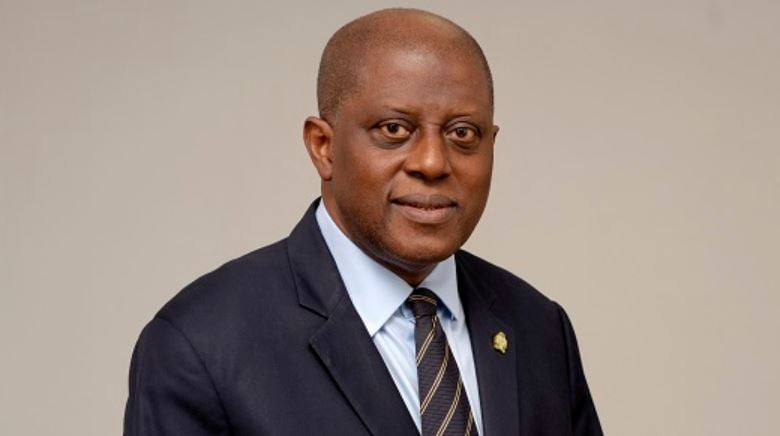
The Central Bank of Nigeria has taken its drive to attract increased capital inflows to the global stage, as the apex bank intensifies efforts to reposition the economy for stability and long-term growth. Under the leadership of Governor Olayemi Cardoso, the CBN is pursuing deliberate strategies aimed at restoring discipline, strengthening confidence and creating sustainable investment opportunities for both domestic and international investors.
At a recent engagement in Washington, D.C., Cardoso reassured global investors of Nigeria’s renewed commitment to macroeconomic stability, transparent markets and predictable policy direction. The message was clear: as investor confidence improves, the economy stands to benefit from stronger capital inflows, improved exchange rate stability and increased foreign reserves, all of which are critical to sustainable economic growth.
In the global marketplace, outcomes are rarely accidental. Success in attracting capital and achieving economic development is typically the result of long-term planning, clarity of purpose, and transparent engagement with investors. These were the core themes Cardoso conveyed to international investors at the just-concluded US–Nigeria Executive Business Roundtable in Washington, D.C.
At the forum, the CBN governor presented a confident, reform-oriented narrative of Nigeria’s economy, anchored on rules-based management, institutional credibility, and a willingness to make difficult but necessary policy choices. The engagement, convened by the US Chamber of Commerce’s US-Africa Business Centre, brought together senior US corporate executives, institutional investors, and policy influencers at a pivotal moment in Nigeria’s ongoing economic reset.
The high-level meeting was designed to strengthen commercial ties between the two countries and attract long-term capital into the Nigerian economy. For Cardoso, sustainable growth cannot be achieved without credibility. He reaffirmed Nigeria’s firm commitment to macroeconomic stability and predictable policy frameworks, stressing that the country is pursuing reforms anchored on transparency and discipline.
Addressing participants, according to information sourced from the bank, Cardoso told international investors that Nigeria remains committed to rules-based economic management, transparent markets, and consistent policies. He explained that the ongoing reforms are deliberately structured to rebuild confidence and provide clarity and certainty for investors navigating an increasingly volatile global environment.
According to him, the authorities are focused on laying a stable macroeconomic foundation capable of supporting sustainable, private sector–led growth. He noted that reforms in the foreign exchange market have been central to improving transparency and price discovery, while the adoption of orthodox monetary policy is helping to anchor expectations and manage macroeconomic risks.
Cardoso also highlighted the modernisation of Nigeria’s payment systems as a critical part of the country’s investment proposition. He noted that an efficient, secure, and inclusive payment infrastructure is essential for business expansion, innovation, and financial inclusion, all of which are key drivers of long-term growth.
The US–Nigeria Executive Business Roundtable brought together American and Nigerian corporate leaders, institutional investors, and policymakers to discuss Nigeria’s macroeconomic stabilisation efforts, regulatory clarity, and opportunities to scale bankable projects across priority sectors. Discussions focused on unlocking investments in infrastructure, energy, financial services, agriculture, and technology, while addressing investor concerns around policy consistency and the broader investment climate.
Reacting to the discussions, President of the US-Africa Business Centre at the US Chamber of Commerce, Ms Kendra Gaither, said global investors are increasingly drawn to markets that demonstrate discipline and credibility.
“What investors are responding to today is clarity, clear rules, credible reforms, and a seriousness of purpose. Nigeria’s message is increasingly one of discipline and opportunity, and that matters in a global economy actively seeking stability and predictability,” Gaither said.
Reforms take-off point
The CBN has embarked on a series of far-reaching reforms aimed at attracting foreign capital, achieving price stability, and stabilising the exchange rate. In 2023, the new administration, working with the apex bank, liberalised the foreign exchange market, ended central bank financing of fiscal deficits, and reformed fuel subsidies. These measures were complemented by efforts to strengthen revenue collection and tackle surging inflation.
Since the implementation of these reforms, Nigeria’s international reserves have grown, while access to foreign exchange through official channels has improved. The country also successfully returned to the international capital markets last December and has since received upgrades from rating agencies. In addition, a new domestic, privately owned refinery has begun repositioning Nigeria higher up the value chain within a fully deregulated downstream market.
CBN policies, including currency reforms, have helped attract investment inflows and reduced the need for heavy intervention in the domestic foreign exchange market. The unification of exchange rates and the clearance of over $7bn in foreign exchange backlogs have improved Nigeria’s investment outlook, with multilateral institutions such as the World Bank describing the measures as bold steps toward long-term economic sustainability.
Nigeria’s sovereign risk spread has also declined to its lowest level since January 2020, erasing the premium accumulated during the pandemic and subsequent economic strains. These developments reflect deliberate efforts by policymakers to restore confidence and sustain capital inflows into the economy.
As part of efforts to tame inflation and strengthen policy coordination, the CBN recently hosted the Monetary Policy Forum 2025, bringing together fiscal authorities, lawmakers, private sector representatives, development partners, experts, and academics. The forum, themed “Managing the Disinflation Process,” was aimed at improving monetary policy communication, fostering dialogue, and enhancing collaboration on key policy challenges.
At the forum, Cardoso said the apex bank’s priority is to sustain price stability, pursue a planned transition to an inflation-targeting framework, and implement strategies to restore purchasing power and ease economic hardship. He reaffirmed the CBN’s disciplined approach to monetary policy, noting that the goal is to ensure policy remains forward-looking, adaptive, and resilient.
“Managing disinflation amidst persistent shocks requires not only robust policies but also coordination between fiscal and monetary authorities to anchor expectations and maintain investor confidence. Our focus must remain on price stability, the planned transition to an inflation-targeting framework, and strategies to restore purchasing power and ease economic hardship,” Cardoso said.
The CBN has also moved to strengthen the banking sector by introducing new minimum capital requirements for banks, effective March 2026. The measure is designed to enhance resilience and position Nigeria’s banking industry to support the country’s ambition of building a $1tn economy. According to the apex bank, these reforms underscore its commitment to creating an enabling environment for inclusive and sustainable economic development.
However, Cardoso cautioned that achieving macroeconomic stability requires continuous vigilance and a proactive monetary policy stance. “As we shift from unorthodox to orthodox monetary policy, the CBN remains committed to restoring confidence, strengthening policy credibility, and remaining focused on its core mandate of price stability,” he said.
He added that a recent easing of monetary policy became necessary following a review of macroeconomic conditions. According to him, the Monetary Policy Committee’s decision to ease the policy stance was informed by improving inflation trends.
“The committee’s decision to lower the monetary policy rate was predicated on the sustained disinflation recorded in the past five months, projections of declining inflation for the rest of 2025, and the need to support economic recovery efforts,” Cardoso explained.
Investors’ interest
Global investors are increasingly showing interest in Nigerian assets as the impact of CBN reforms spreads across key sectors of the economy. This renewed appetite was evident in Nigeria’s recent return to the international debt market, with the successful issuance of a $2.25bn dual-tranche Eurobond.
The Eurobonds, maturing in 2036 and 2046, recorded the largest order book ever achieved by the country, underscoring strong investor confidence in Nigeria’s macroeconomic policies and fiscal management.
The 10-year, $1.25bn bond maturing in 2036 was priced at a coupon of 8.6308 per cent, while the 20-year, $1.10bn note due in 2046 carried a coupon of 9.1297 per cent.
According to the Debt Management Office, the transaction attracted orders exceeding $13bn, reflecting broad-based demand from investors across the United Kingdom, North America, Europe, Asia, and the Middle East.
Minister of Finance and Coordinating Minister of the Economy, Mr Wale Edun, said the record subscription demonstrated global confidence in Nigeria’s macroeconomic outlook.
“This successful market access demonstrates the international community’s continued confidence in Nigeria’s reform trajectory and our commitment to sustainable, inclusive growth,” Edun said.
Director-General of the DMO, Patience Oniha, noted that the issuance attracted strong demand from a diverse mix of fund managers, insurance and pension funds, hedge funds, banks, and other financial institutions, highlighting Nigeria’s broad investor base across regions and asset classes.
“Nigeria’s ability to access the Eurobond market to raise long-term funding needed to support the growth agenda of President Tinubu is a major achievement for Nigeria and is consistent with the DMO’s objectives of supporting development and diversifying funding sources,” Oniha said.
Even before the Eurobond issuance, Nigeria’s investment profile had improved, drawing positive assessments from global analysts. Emre Akcakmak, portfolio manager at East Capital, said Nigeria appears to be regaining momentum as long-awaited economic reforms take hold.
Key measures, he noted, include improved currency liquidity, greater flexibility for investors to repatriate profits, and a more stable naira. “We feel the Central Bank of Nigeria will continue to stem any sharp appreciation of the naira to limit profit-taking from the fast-money community,” Akcakmak said.
Samir Gadio, head of Africa strategy at Standard Chartered Plc, also highlighted improving investor sentiment. “Portfolio inflows have likely been supported by improved confidence amid key structural reforms, better FX market functioning and moderating dollar-naira volatility, as well as the still-robust nominal yield buffer,” Gadio told Bloomberg. He added that Nigeria’s local market is viewed as less correlated with global risk conditions than more liquid emerging market peers.
Positive market reactions
Following the Eurobond issuance, the naira appreciated, while Nigeria’s external reserves climbed to a seven-year high of $46.07bn. The last time reserves were at a comparable level was August 24, 2018, when they stood at $46.09bn. The naira has also shown signs of stabilisation across different market segments.
In an emailed note to investors, Head of Investment Research at Comercio Partners Limited, Dr. Ifeanyi Uba, said investor appetite for Nigerian assets has been supported by ongoing reforms, including fuel subsidy removal and naira devaluation. He noted that while these measures have been economically painful, they have improved fiscal transparency and boosted market confidence.
“With emerging market governments issuing nearly $240bn in debt so far this year, surpassing even pandemic-era levels, Nigeria’s return underscores both the renewed investor hunt for yield and a sign that African frontier economies may once again diversify funding sources amid more favourable global conditions,” Uba said.
Analysts at Comercio Partners described the Eurobond issuance as a strong reaffirmation of investor confidence despite heightened global geopolitical tensions. They noted that while the inflows will bolster reserves, provide fiscal breathing room, and strengthen Nigeria’s ability to meet short-term obligations, the increased exposure to foreign currency debt also raises foreign exchange risks and interest burdens.
They added that as the CBN continues efforts to unify the FX market and clear outstanding backlogs—measures that have temporarily restored confidence—maintaining currency stability will be critical to sustaining recent gains.
Adebowale Funmi, head of research at Parthian Securities, said the Eurobond oversubscription of more than 400 per cent reflects strong investor confidence in Nigeria’s economic outlook. He attributed the renewed optimism to ongoing reforms and Nigeria’s recent removal from the Financial Action Task Force grey list, developments that have significantly improved the country’s credibility and perception in global markets.