
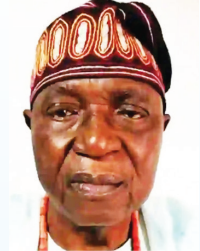


The Managing Director of the Rural Electrification Agency, Abba Aliyu, has identified restrictive regulations and financing constraints as major challenges slowing efforts to electrify rural communities, saying the agency is pushing for legal adjustments to unlock large-scale private investment.
Aliyu, in a chat with our correspondent, said current mini-grid regulations, which cap projects at one megawatt, are limiting the scale and sustainability of rural power projects in a country seeking billions of dollars in investment to close its electricity access gap.
“One of the challenges that we have seen is that the regulation is stifling us a bit. If you look at the mini-grid regulation, there’s a cap of 1MW. You can’t develop the mini grids more than 1MW,” Aliyu said.
He explained that many investors prefer larger projects because higher investment sizes improve sustainability and returns, even though they come with higher risks. According to him, the current cap discourages such investments.
“This is a country that wants to attract investment of billions of dollars to address the electricity gap. Some investors would like big projects because the higher the investment, the more the sustainability and the more the return; of course, the higher the risk,” Aliyu said.
The REA boss has therefore engaged the electricity regulator to push for changes to the mini-grid framework, proposing that the cap be raised to between 5MW and 10MW. Aliyu noted that several smaller African countries with fewer unserved populations already allow much larger mini-grid developments.
“So, we approached the regulator to say, ‘Please change this mini-grid regulation. Increase it from 1MW to 5MW or 10MW’. Look at other African countries like Sierra Leone, Gambia, and Liberia. The number of people without electricity is not more than 10 million to 15 million. But their mini-grid regulations allow them to develop a mini-grid with up to 50 MW,” he said.
He disclosed that the regulator showed responsiveness by granting derogation approvals for some ongoing projects. In the first states where the REA is developing 42 interconnected mini-grids nationwide, approvals were given to exceed the 1 MW limit.
“To show you the responsiveness of the regulator, in the first states where we are working on developing 42 interconnected mini grids across the country, they gave us a derogation approval to develop those interconnected mini grids above the 1MW cap,” Aliyu said. “So, we have up to 9.3 or 9.5 megawatts that we are developing,” he added.
According to him, the regulator has also commenced the process of issuing a new mini-grid regulation that would formally raise the capacity cap, saying he was on this with the Minister of Power, Adebayo Adelabu.
Beyond regulation, Aliyu said financing remains a critical hurdle, stressing that government funding alone cannot deliver universal electricity access. He said the agency is deploying innovative financing models to crowd in private capital.
“Another thing is the financing. And that is why we are creating this innovative financing to make sure that we attract as much as possible private sector financing into the sector, because the government cannot solve this problem,” he said.
Aliyu described rural electrification as a viable infrastructure business rather than a purely social service. “And it’s a business. It’s an infrastructure finance. The way you build houses to make money is the same way you can address electricity access and make money. That is what we are doing,” he added.