


The Inter-Governmental Action Group against Money Laundering in West Africa has said that a largely informal economy in the West African regional bloc is driving the human trafficking market, said to be worth about $450bn annually.
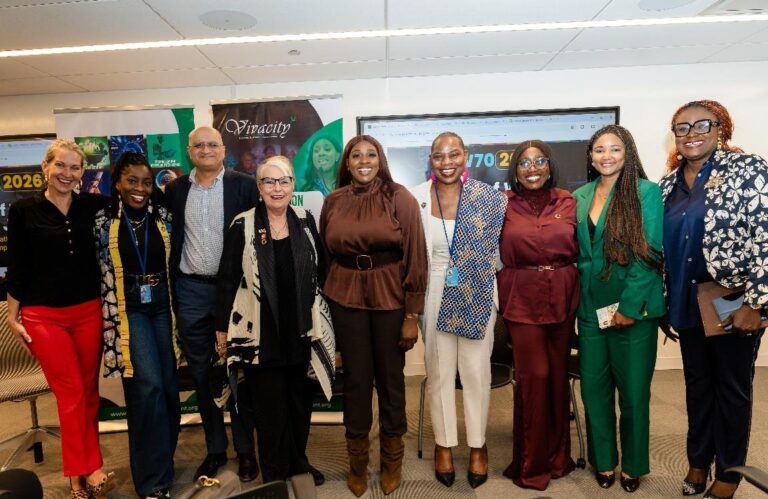
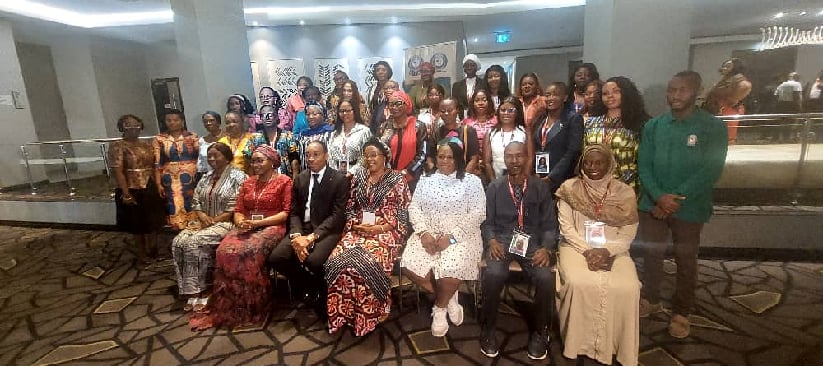
This was disclosed at the opening ceremony of the joint GIABA-ECOWAS Gender Development Centre Regional Forum on Women and Transnational Organised Crime: Human Trafficking Risks in West Africa, held in Lagos on Wednesday.
According to the International Labour Organisation, human trafficking generates profits that rival some of the world’s largest corporations. As of 2024, the ILO said that the illegal industry generated billions of dollars from forced commercial sexual exploitation, while estimates show traffickers hold 49.6 million people in modern slavery worldwide, including 12 million children (ILO and United Nations, 2024).
Speaking at the event, the Director-General of GIABA, Edwin Harris, who was represented by the Acting Director of Policy and Research, Dr Jeffery Isima, said, “West Africa is a region where trafficking is most prevalent. So, again, West Africa has a lot of problems. Domestic and cross-border child trafficking remains. Traffickers do not only exploit the people’s resources. They also exploit our weak financial systems.”
Highlighting the factors driving human trafficking, he said, is “the informality of the economic systems that we all live in. People pay money in cash. Everything is informal. It is difficult to trace the money through the banking and financial systems. The nature of our financial system is largely informal transactions; it is cash-based, mostly. Normally, if you want to buy a car, for example, you should go to the bank or issue a cheque or pay with a bank card, but people prefer to take cash. But in most parts of West Africa, payments are made in cash.
“People prefer to take cash, and when you make payments by cash, you are evading traceability. It is difficult to keep track of the movement of money. If anything goes wrong with that transaction, it is difficult to trace who bought and who sold. Informality and cash transactions facilitate money laundering and other financial crimes because it is difficult to combat crime in such an environment. What we are doing to deal with it is to, first of all, help the Nigerian government to enhance financial inclusion and the cashless policy to make it take good effect so that people can do transactions, do huge or massive transactions through electronic payments, which are easier to trace if anything goes wrong.”
Harris also added that while women and children make up a significant portion of the victims of human trafficking globally, they are also perpetrators of the inhuman trade.
“When I say women are victims, you go like, ‘Oh, women, they are victims. You would like to be victims. No. Sometimes they are perpetrators. Sometimes, the women voluntarily, consciously take a monopoly on the process of crime. Not only that, but they also participate. They convince the young, poor girls in rural communities. In Europe, she acts as a mother who receives them. They (victims) live in her house. She provides the hostels for their lodging and prostitution. So women are involved; they are not only victims,” he said.
In her opening address, the GIABA National Correspondent and Director-General of the Nigerian Financial Intelligence Unit, Hafsat Bakari, who was represented by Mrs Biola Shotunde, said, “The decision to examine human trafficking through the combined analysis of financial intelligence, transnational organised crime and gender is both timely and strategic. It reflects a growing recognition that trafficking is not only a social or humanitarian issue but a financially motivated criminal enterprise in our region that thrives on weak systems, fragmented resources and limited financial visibility; hence, the need for us to really work together on responding in a holistic format to this very important criminal network. Human trafficking is a profitable organised crime. Human trafficking remains one of the most accretive forms of transnational organised crime globally.
“According to ILO and UNODC estimates, post-slavery trafficking generates over $450bn U.S. dollars annually. This is a huge and worrisome issue. Placing it among the top revenue-generating criminal activities in the world, women and girls account for over 60 per cent of the identified victims globally, with sexual exploitation and domestic savagery particularly prevalent in our region. Behind every trafficked victim lies a defined financial trade: payments for recruitment, transportation and project documentation, accommodation and exploitation.
“These proceeds are laundered through banks, accounts, mobile phone platforms, informal bank transfer systems, shell businesses, and increasingly through digital and crypto-enabled channels and transnational jurisdictions. For this reason, trafficking cannot be effectively tackled without integrating anti-money laundering and counter-terrorism tools into our national and regional crime systems.”
The Minister of Women Affairs and Social Development, Imaan Sulaiman-Ibrahim, in her address, emphasised the importance of the gathering and what the federal government was doing to tackle the crime.
Sulaiman-Ibrahim, who was represented by the Assistant Chief Community Development Officer in the ministry, Mrs Udeme Nsisak, said, “This forum is both timely and necessary. Today, West Africa stands at a critical juncture where transnational organised crime, particularly human trafficking, continues to threaten our collective peace, security, and development. Women and girls remain disproportionately affected. Not only as victims of trafficking, exploitation, and violence, but increasingly as unwilling conduits in criminal networks that use them as instruments for money laundering, illicit financial transfers, and other criminal activities linked to terrorism financing.
“These are not abstract traits; they have real implications for our communities, our economies, and our future. It is for this reason that the Government of the Federal Republic of Nigeria continues to prioritise gender-responsive security, governance and protection of vulnerable populations and the strengthening of systems that prevent, detect, and disrupt organised criminal activities.”
The Director-General of the National Agency for the Prohibition of Trafficking in Persons, Binta Bello, represented by Zonal Commander Comfort Agboko, noted that the human trafficking world easily adapts to new strategies, saying, “Trafficking networks continuously modify their recruitment, transportation, and exploitation strategies in response to law enforcement actions and regulatory controls. Increasingly, perpetrators exploit digital ecosystems, social media platforms, online recruitment portals, encrypted communications, and electronic financial channels to facilitate the selection, recruitment, and cross-border movement of victims. These developments underscore the growing convergence between trafficking in persons and cyber-enabled transnational economic strategy.
“Women and girls remain particularly vulnerable in these evolving trafficking typologies, facing disproportionate rates of sexual exploitation, forced labour, domestic servitude, and related forms of abuse. These risks are further compounded by irregular migration pathways, porous borders, socio-economic inequalities, and limited cross-border data exchange.”
The NAPTIP boss also disclosed that the agency has continued to align its operational strategies with international and regional commitments.
“Our interventions focus on intelligence-linked investigations, enhanced digital monitoring and cyber-enabled crime detection, victim-centred protection frameworks, and strengthened inter-agency collaboration at the national and sub-national levels. We have also prioritised co-operation with the Nigerian Financial Intelligence Unit, established an effective partnership with the Nigerian Immigration Service, and engaged our inter-agency and technology-driven stakeholders to respond to emerging trafficking pathways.
“Nevertheless, the transnational nature of trafficking necessitates a deeper operational synergy amongst states and the region. The ECOWAS protocol on free movement of persons, residents, and establishments, while critical to regional integration, also requires a complementary safeguard to prevent this exploitation by organised criminal networks. Similarly, the ECOWAS National Action Plan on Regional Policy and Protection, and its significance of trafficking, emphasise the importance of harmonised legislation, joint investigation, mutual legal assistance, and long-term information sharing,” she said.
The workshop had in attendance participants from different countries in the West African bloc.








