…as FG says interfaith crucial to driving national cohesion, devt
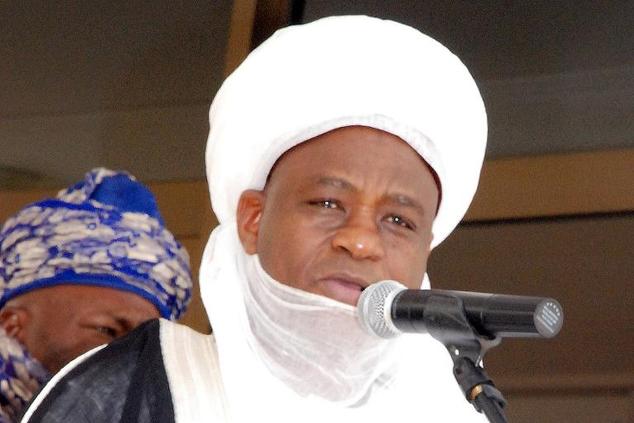
The Sultan of Sokoto, His Eminence Muhammad Sa’ad Abubakar III, has bluntly asked interfaith leaders in Nigeria to speak “openly, honestly and without pretence” if the country is to overcome rising insecurity and diminishing trust.
The Sultan emphasised that lasting peace cannot be achieved by force alone, even as the President of the Christian Association of Nigeria (CAN), Archbishop Daniel Okoh, has demanded that the Federal Government take decisive action against those sponsoring violence in the country.
The leaders, who are both Co-Chairmen of the Nigeria Inter-Religious Council (NIREC), spoke at the second triennial meeting of the Council on Wednesday in Abuja, themed “Collaboration of Inter-Religious Councils with Government to Promote Peace in Nigeria.”
The Sultan, who said he was disturbed that despite years of dialogue, some Islamic and Christian leaders were engaging in hypocrisy, backbiting, and divisiveness, urged religious leaders to foster understanding, neighbourliness, and unity across faiths.
He said: “You can really sit and discuss any issue between you as people, as religious followers. As I said, God doesn’t make mistakes. He created us into tribes and nations so that we could understand one another.
“There are many other things I won’t start quoting from the holy books. But I believe that when we close the session, we should speak honestly and sincerely, without mixing words. We must be very blunt.
“NIREC provides the best platform for religious leaders to speak honestly and resolve differences. Peace cannot be achieved by force alone; dialogue is essential.
“We must reject backbiting and hypocrisy, love our neighbours, and work together across faiths to ensure harmony, understanding, and a peaceful Nigeria for all citizens.
“We say so many good things to one another here, but when we leave these meetings, we start saying negative things behind our backs.
“We need to ask ourselves, should this NIREC continue? Do we still believe in the vision of the founding fathers? Because we come here, discuss good things, laugh together, drink together, then behind the scenes, we backbite and spread hate. That is most unreligious.”
The Sultan warned that religious leaders must stop paying lip service to peace, saying many of the issues NIREC discussed in private were never communicated back to their communities.
“I keep asking myself whether we are deaf, whether we are not honest, whether we are not serious about interreligious collaboration.
Our leaders never taught us to tell lies, to hate one another, or to backbite. If we are truly neighbours and brothers, why should we wish evil upon one another?”
He affirmed his commitment to dialogue as the only sustainable path to peace, noting his background as a former military officer.
“As a military man, I know that no matter how much force you use, you end up at the dialogue table. If you know you can achieve peace without fighting a war, why fight at all?
“Let us talk until late at night if necessary. Let us say our minds fully. From today, we must start a new course—either we continue NIREC as it was founded in 1999 or we modify it to suit the realities before us,” he said.
President of CAN, Archbishop Daniel Okoh, who reinforced the link between peace and justice, called for accountability for perpetrators of violence.
He urged religious leaders to guide citizens in rejecting violence and misinformation while fostering social harmony and unity across faith lines.
“Peace requires justice; those who perpetrate or fund violence must be held accountable. Religious leaders must guide citizens to reject violence, misinformation, and division.
“By working together across faiths, we can protect lives, support victims, promote social harmony, and ensure that unity and compassion become the foundation of a peaceful Nigeria,” Okoh said.
Secretary to the Government of the Federation (SGF), Senator George Akume, reaffirmed the government’s commitment to protecting all Nigerians, safeguarding sovereignty, and promoting peaceful coexistence, as he underscored the importance of inter-faith trust in driving national cohesion.
Akume, who warned that the erosion of trust between Nigeria’s major faith groups poses one of the gravest threats to the country’s unity, said Nigeria was passing through one of its most delicate periods, marked by heightened political rhetoric, internal security strains, and degraded mutual trust that “was almost ebbing into religious conflict” in recent months.
According to him, recent violent incidents from Yelwata in Benue State to Eruku in Kwara, and attacks across Kebbi, Niger, and Zamfara, have deepened public anxiety, even as the government intensifies rescue efforts and arrests of criminal elements responsible.
He reaffirmed President Bola Tinubu’s commitment to vigorously delivering on the constitutional mandate of welfare and security for all citizens.
The SGF stressed that while Christian and Muslim communities have both suffered devastating losses from insurgency, banditry, and communal violence, public narratives often wrongly portray the crises as one-sided. He urged Nigerians to avoid framing violence solely along religious lines, insisting that such narratives deepen suspicion and undermine national cohesion.
“The point is not to engage in a scorecard of pain,” he said, “but to underscore that violence in Nigeria is not monolithic. Both major faith groups bleed when any Nigerian is killed.”
He added that an inter-faith approach to peacebuilding is now “not only ideal but necessary” to restore mutual trust.
The SGF noted that Nigeria’s designation as a “Country of Particular Concern” by the U.S. government further underscored the need for stronger domestic engagement to correct global misperceptions. While diplomatic steps have yielded progress, he said much more work must be done in the short and long term.
He praised NIREC’s 26-year partnership with the Federal Government, describing inter-religious councils as “vital bridges” capable of dispelling misconceptions, mediating conflict, and strengthening the social fabric.
He said the Tinubu administration will increase support for the Council, especially as the economy improves under ongoing reforms.
He outlined areas where government and faith leaders must now collaborate more deeply: inclusive policymaking, early-warning systems for conflict, joint peacebuilding efforts, and promoting justice and rule of law. He also stressed the importance of educating young Nigerians to resist hate propaganda and extremist narratives.
On sovereignty, the SGF emphasised that while Nigeria welcomes international partnerships, “Nigerians must work out Nigerian solutions,” adding that government remains fully committed to protecting every community, regardless of religious affiliation.
Akume revealed that President Tinubu has established a new US–Nigeria Joint Working Group on Security, in which NIREC leaders are expected to play significant roles as part of wider non-kinetic approaches to peace.
He urged NIREC members to use their closed-door session to speak frankly, craft practical solutions, and “reject the voices of division” in favour of justice, compassion, and unity.
“Nigeria will be stronger, better, and enjoy lasting peace if we collectively shame the peddlers of hatred and disunity,” he declared.
Earlier, Executive Secretary of NIREC, Fr. Prof. Cornelius Omonokhua, noted that NIREC’s growing global partnerships and stressed the importance of collaboration with government and communities to promote justice, reconciliation, and peace.
“NIREC continues to strengthen interfaith dialogue, now with global partnerships. Since 1999, it has enabled religious leaders to collaborate with the government in preventing conflict and rejecting the manipulation of religion for violence.
“Our role is to ensure that communities are educated, reconciled, and mobilised to support peace, justice, and national stability,” he stated.