


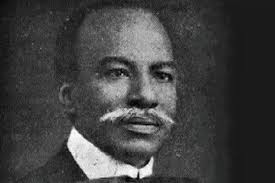
Eighty years after his death, the memory of Herbert Samuel Heelas Macaulay remains deeply etched in Nigeria’s political and nationalist history.
Widely regarded as the father of Nigerian nationalism, Macaulay’s life, work and ideals continue to resonate in a country still grappling with questions of identity, justice, leadership and self-determination.
Born on November 14, 1864, into the family of Samuel Ajayi Crowther, Africa’s first Anglican Bishop, Herbert Macaulay was destined for public life.
Educated in Nigeria and later in England, where he studied civil engineering, Macaulay returned home equipped with technical expertise and a strong sense of political consciousness.
What distinguished him, however, was not just his education, but his courage to challenge colonial authority at a time when such defiance was rare.
Macaulay emerged as one of the earliest and most vocal critics of British colonial administration in Nigeria. Through petitions, protests and relentless public advocacy, he exposed injustices perpetrated by the colonial government, particularly against indigenous landowners in Lagos.
His activism laid the groundwork for organised resistance against colonial rule. One of Macaulay’s most enduring contributions was his use of the press as a tool for political mobilisation.
As a journalist and public commentator, he understood the power of information long before it became fashionable. Through newspapers and public lectures, he educated Nigerians on their rights and challenged colonial narratives that portrayed Africans as incapable of self-rule.
In an era when dissent attracted severe punishment, Macaulay’s fearless writings inspired a new generation of Nigerians to question authority and demand accountability.
His journalism did not merely inform; it awakened political consciousness. Herbert Macaulay’s influence extended beyond activism into formal politics.
In 1923, he became a founding figure of the Nigerian National Democratic Party (NNDP), Nigeria’s first political party.
The NNDP dominated Lagos politics for years and introduced Nigerians to structured political participation, elections and representation.
Through the NNDP, Macaulay demonstrated that Africans could organise, mobilise and govern themselves within a political framework.
This marked a critical transition from protest politics to institutional political engagement, a model later adopted by nationalist leaders across the country.
Beyond his own achievements, Macaulay played a pivotal role in nurturing future leaders of Nigeria’s Independence movement.
He was a mentor and ally to Dr. Nnamdi Azikiwe, whose political philosophy and activism were shaped in part by Macaulay’s nationalist vision.
Together, they formed the National Council of Nigeria and the Cameroons (NCNC), a party that would later become a major force in Nigeria’s struggle for Independence.
Macaulay’s ability to bridge generations ensured continuity in the nationalist movement, transforming individual resistance into a collective national struggle.
Macaulay’s political journey was not without personal cost. He faced imprisonment, harassment and sustained attacks from colonial authorities.
Yet, he remained unwavering in his belief that Nigeria deserved self-rule and dignity. His sacrifices underscored a defining trait of true leadership: the willingness to endure hardship for a greater cause.
He died on May 7, 1946, at a time when the momentum for Independence had become unstoppable. Though he did not live to see Nigeria gain Independence in 1960, his influence was undeniable in shaping the path that led there.
Eighty Years On: Lessons for Nigeria Eighty years after his passing, Herbert Macaulay’s legacy invites reflection. His life reminds Nigerians that meaningful change often begins with courage – the courage to speak truth to power, to challenge injustice, and to organise for the common good.
At a time when Nigeria faces renewed struggles with governance, equity and national unity, Macaulay’s ideals remain profoundly relevant.
He believed in the power of ideas, the importance of civic engagement and the necessity of accountable leadership.
These principles are as urgent today as they were in colonial Nigeria. A life of resistance, repression and resolve Macaulay is celebrated today as the father of Nigerian Nationalism, but behind the honour lies a life marked by intense struggle, personal sacrifice and relentless persecution.
His journey as a nationalist was not paved with applause, but with imprisonment, vilification and constant confrontation with colonial authority.
The travails he endured were the price he paid for daring to challenge an unjust system at a time when silence was safer than resistance.
Macaulay’s travails began soon after his return from England, where he trained as a civil engineer. On resuming work in the colonial service in Lagos, he quickly became disillusioned by racial discrimination and administrative injustice.
Despite his qualifications, he encountered systemic barriers that limited African advancement. His refusal to accept subordinate treatment and unequal conditions eventually led to strained relations with colonial officials and his exit from government service.
This experience became a turning point. Freed from official constraints, Macaulay redirected his talents toward activism, placing himself directly in the crosshairs of colonial power.
One of the most defining episodes in Macaulay’s travails was his imprisonment in 1913. Accused of financial impropriety in a land-related case; charges many historians believe were politically motivated; Macaulay was convicted and jailed.
For the colonial administration, the conviction was a convenient tool to discredit a rising critic. For Macaulay, it became a badge of resistance.
Though imprisonment dented his finances and reputation temporarily, it strengthened his resolve. He emerged more determined to expose colonial injustice, using his experience to highlight the oppressive nature of the system. Macaulay’s activism came at a steep personal cost.
Denied stable employment and targeted by colonial authorities, he lived much of his life under financial strain. His confrontations with the government alienated him from sections of the elite who preferred accommodation over confrontation.
Socially, he was often portrayed by colonial officials and their sympathisers as a troublemaker, agitator and extremist.
This deliberate character assassination was to isolate him and weaken public support. Yet, among ordinary Lagosians and emerging nationalists, his courage earned admiration and loyalty. As his influence grew, so did colonial surveillance.
Macaulay’s speeches, writings and movements were closely monitored. His newspaper articles and public statements frequently attracted official rebukes, warnings and threats. Public meetings he addressed were sometimes disrupted, and his correspondence intercepted.
Despite constant intimidation, Macaulay refused to moderate his tone. He continued to challenge policies he considered exploitative, particularly land laws that dispossessed indigenous Lagos families.
Each act of resistance deepened the hostility between him and the colonial establishment. Macaulay’s travails were not limited to colonial repression; he also faced opposition within emerging nationalist circles.
His leadership style, uncompromising stance and dominance in Lagos politics attracted criticism from rivals who accused him of personal ambition or excessive militancy.