

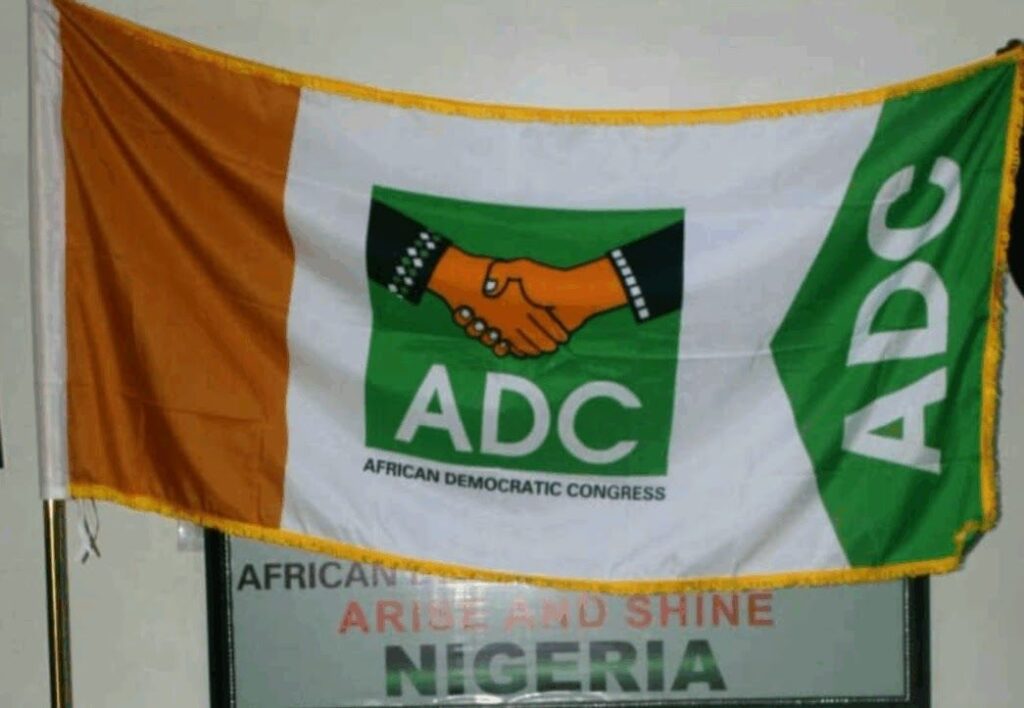
The African Democratic Congress (ADC), on Tuesday, said it is not merely a political party seeking power, but it is already preparing for governance after the 2027 presidential election.
The ADC National Chairman, Senator David Mark, who spoke on Tuesday at the presentation of an interim report by the Chief John Odigie-Oyegun-led Steering Committee on Policy and Manifesto, said while the ruling All Progressives Congress (APC) is focused on attempting to stifle the opposition using any means necessary, ADC is preparing to govern.
Mark recalled that at the inauguration of the committee last February, he remarked that Nigeria’s problems are not new, but the challenge is the correct diagnosis of them, and warned that if the challenges are misdiagnosed, “every solution we propose, no matter how well intentioned, will fall short.”
According to him, policy is not about sounding intelligent, but must be useful, precise and must produce real impact.
He blamed the persistent weaknesses in Nigeria’s economic reform on the abrupt introduction without sufficient sequencing, and without adequate protection for the most vulnerable citizens, disclosing that the Policy and Manifesto Committee has proposed “the Principle of Gradual and Sequenced Reform with Social Cushioning.”
This principle, he added, recognises that reform must be responsible and humane.
“Necessary adjustments must be implemented carefully, with clear sequencing and strong protection for vulnerable populations so that economic reform strengthens the country without placing unbearable hardship on its people,” he added.
The former President of the Senate further disclosed that the Odigie-Oyegun committee recommended that ADC administration should not tax “Survival Income” of Nigerians, which the party accepted, because a country where people provide their own electricity, security, and other amenities “cannot build prosperity by taxing those who are struggling merely to survive.”
Mark added that “a fair tax system must protect everyday Nigerians by ensuring that the burden of adjustment is carried by those with the greatest capacity to contribute.”
He further revealed that the committee proposed the Principle of a Legal Guarantee of Social Protection, through a Social Protection Act that will protect safety-net programmes from political disruption and ensure continuity across administrations.
“This is important because social protection should not depend on political cycles. It must be institutionalised,” he said.
ADC government, Mark stated, will designate kidnapping and banditry as terrorism, and perpetrators “will receive the harshest possible punishment under the law.”
He assured that the justice system will be “swift and credible” to serve as a deterrence mechanism.
“Too often, especially around the issues of kidnapping and banditry, arrests are made, but justice does not follow swiftly enough to create deterrence,” he noted.
The ADC National Chairman stated that the recommendations are an indication that the party is not just talking politics but is committed to rescuing Nigeria.
“The foundational philosophy of the African Democratic Congress is based on the ideology that Nigeria has a duty to provide leadership to Africa and the entire black race; and the strong conviction that Nigeria can only fulfil this role by investing in the development and empowerment of the Nigerian people,” he said.
He assured that the policy and manifesto document will serve as the grundnorm from which all the party’s elected officials at every level would derive their operating and governance principles.
“Therefore, I encourage all those who seek to contest elections on the platform of ADC to show keen interest in the work of this committee,” he advised, and disclosed that the final policy framework and manifesto would be presented for adoption at the party’s National Convention scheduled for April this year.
Oyegun had, while presenting the interim report, described ADC as “a government-in-waiting.”
He stated that the committee discovered during its assignment that Nigeria must rebuild a citizen-centred state; “a state where institutions serve citizens, where the economy produces and creates jobs, where security protects communities, and where governance delivers measurable value to the people.”
The former Edo State governor said Nigeria is facing serious challenges, ranging from economic hardship, insecurity, institutional fragility, to declining public trust.
“But these challenges also create an opportunity for leadership, clarity, and bold policy thinking.
“Nigeria deserves leadership that prepares before it governs; leadership that thinks before it acts; leadership that builds institutions that work,” he added.